The Importance of 1979 in World History

When we think of the most important events of the past 100 year, certain years are particularly crucial in determining the course of history. Among the most important are those that marked the end of a period of conflict and the beginning of a new era of peace, namely: 1918/19 (End of WWI, Peace of Versailles), 1945 (End of WWII, beginning of the United Nations), and 1989 (end of the Cold War and the new era of globalization). However, for this blog, I would like to point to one lesser known year that marked not only the end of a period of conflict or start of peace, but also the beginning of a new period of global interactions, which, for better or worse, still shape the world we live in today.

Why 1979?

In the year 1979, several major events occurred around the world. I will list them by geographic region (East Asia, the Americas, and the Greater Middle East, in no particular orders of importance), and then discuss the impact of each of these events.

In East Asia:

The events in East Asia revolved largely around what China had done during that year. Two important event occurred:

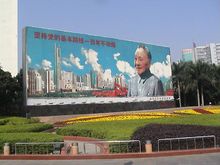
  • China’s economic reform and opening up: In December 1978, during the 3rd Plenary Session of the 11th Central Committee of the Communist Party of China, a national meeting of China’s policy-makers, a new national political and economic policy was implemented. First, the meeting confirmed the role of Deng Xiaoping as the undisputed leader (or “Paramount leader”) of China. Deng had been well known as a reformer who wanted to implement changes to China’s bureaucracy and the way the economy was run. Secondly, in part due to the first, a new national economic policy was set whereby a new model of economic organization was first introduced in the countryside (the Household Responsibility System), and leading to a dramatic increase in agricultural productivity and output. These reforms marked the first stages in the transformation of China from an economic backwater into one of the fastest growing economic entity of the past 35 years.china's reform and opening up
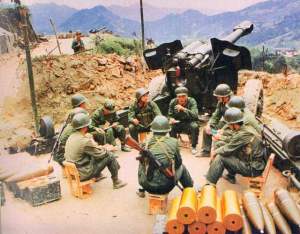
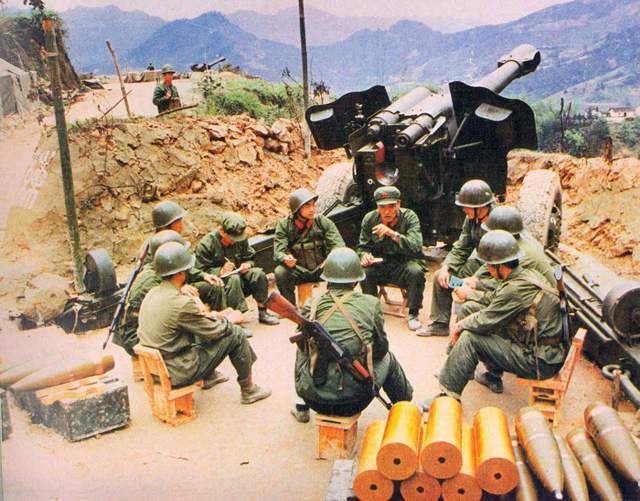
  • China and Vietnam fought a brief border war: The Sino-Vietnamese war of 1979 (or the Third Indochina War) was nominally fought over the Vietnamese invasion of Cambodia, whose Khmer Rouge government was supported by China, and at least launched in part by China to test Soviet resolve in defending its Vietnamese ally. However, the real significance of the war was not in the conduct of the war itself, but rather what the war represents. First, the conflict was the last conventional war in East and Southeast Asia. After a series of on-and-off conflict among East Asian nations from 1931 (when Japanese forces first invaded China) to 1979, the nations of East Asia is finally at peace with one another. During this period, the clashes of a variety of ideologies such as militarism, colonialism and anti-colonialism, national and ethnic nationalism, and finally communism all served to fuel a state of continuous conflict in the region. The end of the conflict also marked the beginning of a period of rapid economic growth for not only China, but also for other nations of Southeast Asia. The trajectory of East Asian history was forever altered after 1979.china-vietnam-war

The Americas:

The role of the United States during this time period cannot be exaggerated. It was the world’s foremost economic power; and by most measures, the world’ leading military power as well. The economic difficulties experienced by the United States during the latter half of the 1970s can be explained as an economy in transition from an export-oriented industrial economy to one based on services and high-tech information, along with a significant rise in imports for manufacturing goods. Nevertheless, the United States faced two difficulties as its economic output continues to grow, all with respect to energy:

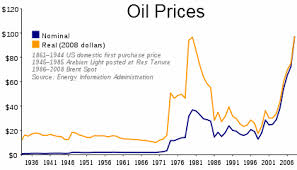
  • The Second Oil Shock: In 1973, the United States experienced what is later termed the First Oil Shock, whereby, due to a confluence of factors such as a tightening of the oil market (where supply is barely keeping up with demand), instability in the oil producing regions, and finally an outright embargo on the part of the OPEC (Organization of Petroleum Exporting Countries) against the United States for its role in supporting Israel, led to a massive increase in the price of oil. However, this Second Shock of 1979 was due to quite different causes. The Iranian Revolution (to be discussed below) led to a sudden increase in the price of oil as several million barrels of oil were removed from the market. This event helped to trigger a recession in the United States, along with significant political fallouts for President Carter and the Democratic Party, and marked the rise of conservative, neoliberal thinkers in economic circles (The Chicago School of Economics, mot vocally represented by Milton Freidman). Moreover, the Oil Shock leads to increasing financial instability in the US and Europe, and helped to make an already fragile economic situation even worse by introducing an element of inflation along with economic stagnation into the economy.oil shock
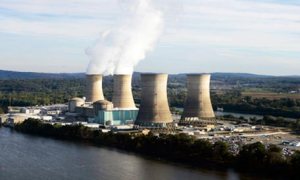
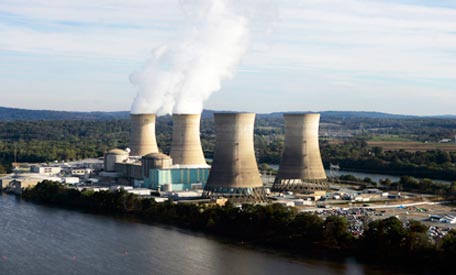
  • The nuclear meltdown of Three Mile Island: The nuclear accident at Three Mile Island (a partial meltdown) was another significant event in the energy landscape of the United States in 1979. The accident, while not particularly significant in terms of destruction or radioactive materials released, did lead to a change in perceptions in the public eyes on the issues of nuclear power. This event helped to energize the environmental movement on the issue of nuclear power, and eventually this led to a freeze on all new nuclear power plant construction in the United States. Nuclear energy, which had seemed so promising to many Americans as a reliable source of energy, had now been relegated to the fringe. Another consequence of this event is the increasing dependence of the United States on petroleum as an energy source. Increasingly, the United States began to intervene on a larger scale in oil-exporting regions to ensure that a reliable source of energy supply does not become a problem for the United States.Three Mile Island

Greater Middle East:

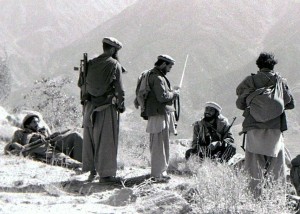
  • Soviets invaded Afghanistan. The Soviet Union, through the invasion of Afghanistan in support of the Afghan communist government, in effect launched a series of chain reactions that had the most profound consequences today. First and foremost, the Soviets hastened its own collapse by expending an extraordinary amount of resources (something that it cannot afford due to its fragile economic situation), in both manpower and money. In addition, the image of the Soviet Union as offering an alternative to the “imperialism” of the United States was destroyed, and its influence in the world stage declined drastically. More importantly for the trajectory of world history, the conflict generated a huge response across the Islamic World, in both fighters and money, in support of the “holy war” conducted by the resistance fighters (known as the mujahedeen) to the Soviet Union. Over time, the conflict takes on an increasingly religious nature, where it is seen by many Muslims as a conflict to end the oppression of the Afghan people. Thus, Political Islam in its modern form was born. Another event also took place during the latter half of the conflict which have strong ramifications today. Among the thousands of young foreign Jihadists was a young man by the name of Osama Bin Laden. Indeed, it is in Afghanistan that Al-Qaeda first started. It is important to note the name Al-Qaeda translates as “The Base”, the base by which Islamists in Afghanistan organized themselves and fought against Soviet aggression.Soviet invasion of Afghanistan
  • Islamic extremists took control of the Grand Mosque of Mecca: In late 1979, religious militants took over the Grand Mosque of Mecca and openly challenged the Saudi family’s religious authority. (The Sauds have claimed in their title that they the “Custodian of the Two Holy Mosques.) Later, Saudi security forces moved in and forcibly cleared out the insurgents, resulting in hundreds of causalities. The event, played out on televisions in the Arab World, shocked many who watched it. At the time, many in the Islamic world, from Philippines to Turkey to Pakistan, blamed the United States and Israel for this attack, which in turn led to massive demonstrations, including the burning of US embassy in Pakistan and Libya. The perpetrators were dealt with harshly, and all 68 rebels were captured and beheaded. However, what is truly significant about this event was that the role of religious authority in Saudi Arabia did not diminish after this attack. Instead, the religious conservatives were given more power. In order to appease the religious scholars and social conservatives, the Saudi government turned toward religion to uphold their own legitimacy. Religious schools became more prevalent; the social roles of women were cut back, and in some cases were removed from public altogether. After 1979, Saudi Arabia increasingly became a religious theocracy, with profound influence on the rise of Political Islam.Saudi Mosque seizure
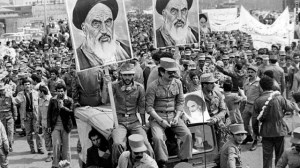
  • Iran’s Islamic Revolution: The final event in the Middle East that is crucial to our understanding of the year 1979 was the conservative Islamic revolution in Iran. By the end of 1978, the government of the Shah of Iran was in its last throbs. The question facing many Iranians was not whether or not the Shah should go, but rather, what sort of government should replace it. The solutions were far ranging, from the Tudeh Party (Communist Party of Iran) to religious ultra-conservatives. While the average Iranian was debating and fighting among those alternatives, the Shah suddenly left the country and left a large power vacuum in a country where the heavy hand of the state had been ever present. Into this power vacuum, an exiled religious teacher – Ayatollah Ruhollah Khomeini – made a landing in Iran. The masses suddenly found a leader that they can unite themselves around, and within weeks, a religious theocracy, as though something coming out of the Middle Ages, was born. The Ayatollah possessed hatreds towards many groups around the world – communists (both inside and outside the country), Israel and the Zionists, and above all, the “Great Satan” in the form of the United States. This hatred only increased over time as he gained more political power. The impact of the Revolution can be seen immediately, from the Iranian Hostage Crisis with the United States to the inauguration of the decade long war with Iraq, all stemming from this watershed event of the Middle East.Islamic revolution in Iran

Now that we have come to the end of our list of major events of 1979, I would like to make note of a few more things:

First, even though in this article I have treated world events as separate in their geographic scope, in reality, all of these events are intimately connected and one often feeds off the other. For instance, American dependence on foreign oil increased just at the same time as Iran’s Islamic Revolution, which removed several million barrels/day from the world market; the fuel crisis of 1979 was certainly worsened by the conflicts in the Middle East. No event in the world took place in isolation, and each one influenced and shaped the outcome of the other.

Secondly, due the scope of this article, I am unable to discuss many of the important events in detail, but they are often important in their own right. 1979 was a year of many changes, yet it has frequently been ignored by many who are not as familiar with world history. I hope that through this article, I can at least spark some interests among my blog readers in the world around us, and view current events through a historical lens.

Finally, the history of the world since 1979, the fall of the Berlin Wall, the War on Terror since the early 2000s, the economic rise of China and increasingly East Asia as a whole, the challenges and benefits of globalization, all directly or indirectly traced their root to the tumultuous year of 1979. In many ways, the events of 1979 is still influencing the world around us, and we are still living in its shadows. 1989 Fall of the Berlin Wall

China’s Future, a demographic perspective

Headlines around the world have often captured the economic rise of China in vivid details: its ever-expanding industrial output, its rapid increase in the amount of mega-corporations that threatened to upset the status quo (think of Lenovo, Huawei, and Alibaba), and above all, its mass market of consumers, who are only beginning to consume in quantities not hereto imagined. But in this blog post, I want to focus on another core aspect of its economy that perhaps is more crucial for China’s economy in the long run: its labor force.

Mao had famously said something to effect that the more populous a nation is, the more strength that it has. Initially, what he meant to suggest is that because China is so populous, it is able to survive a nuclear confrontation or any other national catastrophes that could have easily crippled other nations. And for a long time, China’s demographic growth had been remarkable, seeming to heed his words, growing from 543 million in 1950 to 814 million in 1970 (see graphs)China population pyramid 1970, whChina_Pop_Pyramid_2012 en the median age in the country is only 20. Of course, many nations have growth much fast than this, but for a nation the size of China, the impacts are quite noticeable. However, simply by adding raw number of people to the economy does not suggest that the economy has been growing as well. In fact, in certain years (see graph 2), the economy contracted quite severely during the Mao era. Overall the pace of growth is only from the duration of the period from to    .

This lack of growth during the Mao era can be contrasted to the beginning of the Deng Xiaoping era, where following a series of liberalizations, the economy had become more robust and dynamic, growing at over 9% percent each year for the period from 1979-2014Chinese economic growth compared to its neighbors. The implementation of economic reforms in the form of special economic zones, etc, helped to propel the economy into new economic heights. Another factor that propels this growth that is often neglected is the so called “demographic dividends”.

The past 35 years had witnessed what is often termed as a demographic dividend, whereby the nation have both low old-age population and low younger generation. This period in a nation’s history (particularly in the case of East Asia, where this effect is the most pronounced) is characterized by high economic growth. For instance, look at the demographic pyramid for 2012. The majority of the population is of working age and contributing to national economic output, at the same time, less economic resources are required to take care the elderly (in the form of healthcare, etc), and less is needed to take care of the young (in the form of education, etc). This saving of resources freed up more capital and labor for the economy, and enabled the phenomenal economic growth that we came to associate with the East Asian countries.

However, one can readily see that there is a catch to this scenario. Population all eventually age and the working population today is the retirees of tomorrow. With a rising share of the elderly, the demographic boom will quickly turn into a demographic bust. In China’s case, this will become an acute problem (see graph)China2050. Decades from now, when 20, 30 or even 40% of the population is over the age of 65, what do we do then? Economically, the burden will be ever greater on the central government to provide for the elderly, increasing tax burdens on already a smaller working age population. If there is a lesson from the Japanese experience for China, it’s that population is at the center of any comprehensive national development strategy. Failure to take into account the demographic factor will have catastrophic consequences.

A musing on the word “farmer”

Here in the United States, we frequently use the word farmer to describe someone who engaes in agricultural pursuits or who derive a large source of their income from farming activities. Accoding to the most commonly used definition (as defined by the Merriam-Webster dictionary): “a person who cultivates land or crops or raises animals (as livestock or fish).” Based on this definition, a large portion (over a billion in fact, according to official figure, but like with all statistics, the true figure is much higher) is engaged in agricultural pursuits. Farmers have always been recognized as one of the largest groups of people in society, and their role in the production of food is very well appreciated. But are all “farmers” created equal?

I remember hearing about people in my hometown who are considered to be “farmers” (in rural areas of California) but were in fact large landowners who owned thousands of acres of land (chiefly planted with almond trees) and whose revenue is in excess of 10 million dollars a year. Now compare a picture of this individual with a sub-Saharan “farmer” who engages in subsistence farming (like other 60% of the population of Sub-Saharan Africa), and whose produce can barely feed his own family of 7, and you quickly get a picture of the diversity in the word “farmer”.

The word “farmer” in its modern usage is essentially an American construct, as it implies ownership of the land you are working on and have to be associated, at least in America, with large estates and strong independent ownership. The millions of people who work on those farms on a contractual basis are termed “farm workers” rather than farmers, since they are merely needed for the harvesting and planting of fruits/vegetables/crops. In many ways, being a “farmer” in the United States doesn’t seem to be a bad occupation: you receive a steady source of income and derive a sense of satisfaction from working for yourself. Granted, no one in a capitalistic society is entirely free from the fluctuations on the market or the uncertainties of weathers, but with economy of scale (which many farmers in the US enjoy), over the long run, farmers seemed to be living a decent life. With increasing consolidation in the United States in the farming industry, the small family farms are increasingly becoming a thing of the past, and we entering an age where large corporate farmers are becoming the way of the future.

For the rest of the world, “peasant” is the more appropriate term. Even in advanced developing nations like China, over 30% of the labor force engaged in farming as their daily occupation, and in the rest of the developing and underdeveloped world, the peasantry ranges from 40% to 80% of the population of the area. The peasantry is a poor lot with none of the connotations that we associate with being a “farmer”. But unfortunately, this is also the state of the world that we live in. However, to capture the true state of the world’s farming community, we should use the word “peasant” a little more.

Fertility Rates: Why are they so different around the world

I wrote about this topic recently for a class of mine, and I thought I would share this topic here, since it’s an issue that have interested demographers and other social scientists for a long time.

Introduction and Significance of the Study:

It has been frequently observed that women around the world today have vastly different fertility rates. Last year, a news article from CBS news suggests that the dropping birthrates, especially in developed nations, is threatening global economic growth rate.(CBS) This is indeed a worrisome issue for policy-makers, from Germany to Japan. At the same time, we note that these developed nations are also among the most densely populated regions in the world, suggesting that these nations in the past have had high population growth rates, but subsequently slowed their birth rates. At the same time, many nations in Sub-Saharan Africa have relatively low density populations and abundant agriculturally productive land (Kenya, Tanzania), yet are economically underdeveloped. In class, we spoke about the “demographic transition”, i.e. each of these countries are in a different stage of this transition from high to low birth rates (Goldstein). However, given the observation that many nations that have low birthrate already have a high population concentration, we wondered if population density in fact affects the number of children a woman will have and if other underlying factors – such as governmental actions, social norms (especially for women), and levels of economic development – will affect the number of children a women have over the course of her lifetime.

Hypothesis: Regions with high population density would have lower fertility rates; this is due to economic development over time, the role of women in society and government policies.

In this study, we looked at 3 broad geographic regions: East Asia & Pacific, Middle East & North Africa, Sub-Saharan Africa and compared their developments over time. These 3 regions were used since the cultural practices, economic fortunes, and governmental influences were vastly different and provides a good cross-sectional study for analyzing the changes in global fertility rates. We will determine if the changes in fertility rates in these three regions are indeed negatively correlated with population density and other underlying factors such as economic development, women’s employment and other factors such as the availability of contraception.

2) Data Extraction and Methods:

All data for this study came from the World Bank Data, from 2012 and 2013 depending on its availability. We utilized all available data the following variables to complete the study:

  • Total fertility rates: the average number of children that a woman is expected to have over the course of her lifetime (for 1960-2013)
  • Overall population density: total population of the country divided by its total land, in people/km^2 (for 1960-2013)
  • GDP Per Capita. The Gross Domestic Product (GDP), a measure of total national economic output, divided by the country’s population for a given year (for 1960-2013)
  • Female labor force participation rate: percentage of women active in the labor force, aged 15 or older. (for 1990-2012)
  • Contraception prevalence: the percentage of women (or her partner) who were practicing any form of contraception; for women ages 15-49. Data available only for 1990, 2000, and 2010.

In this study, we used several different prospective factors that may affect the overall population density and were associated with changes in fertility rates for women: GDP per capita, female labor force participation and contraception usage. The three regions were chosen based on their differences in changes in Total Fertility Rates, such as timing and speed of decline, in order to study what could have contribute to this different variations in their respective patterns of decline. The observed period of time was selected as the maximum number of years for which data was available to ensure that whatever correlation we observed was not do to random variations within the data set. In addition, a separate study was done for China to measure a special case of the effect of government policies on the decline in birthrates.

For the sources of data, our date ranges are from 1960 to 2013 for fertility rates, overall population density, and GDP per capita; and ranged from 1990 to 2013 for female labor participation and contraception usage. We use the largest date range available for each variable in order to more accurately determine the long-term trends for each variable.

Methodology: We decided to analyze the data by presenting the relationship between the variables in a graphical format. For readability, we divided the variables into two sets of 3 graphs each, with each graph representing a separate region. The first set of graphs presented fertility, population density and GDP per capita in each of the graphs. For the next set of 3 graphs, we presented fertility rates with women’s labor force participation and access to contraceptives. Then we calculated the correlations between the fertility rates with each of the other variables to give a more definite, mathematical result. The final graph measured specifically China’s decline in birthrate and increasing per capita income.

3) Presentation of Results:

Graphs 1-3 records data for the three regions from 1963 -2013. It measured the changes through time of fertility rates, population density and economic output. Graph 1 depicted Middle East/North African fertility, GDP per capita and population density trends over time. There were several trends common to all. First, there was a very strong negative correlation between the fertility and population density/GDP per capita in all three regions measured (a correlation between -0.8 and -0.98). Second, population density had been steadily increasing for East Asia & Pacific and Middle East, while the Sub-Saharan African density had been increasing much more dramatically. Thirdly, the most rapid phase of GDP per capita increase occurred in all regions after 2000.

For Graph 1, we saw that the fertility rate for the Middle East steadily decreased from 1960 to 1985 (6.87 to 5.88) and then had a steeper decline from 1985 to 2000 (5.88 to 3.04), and finally the decline in fertility stabilized at around 2.75. Meanwhile, the population density increased dramatically from around 10 people per square kilometer to around 36 people per square kilometer, increasing roughly linearly. Therefore, there was a strong negative correlation between population density and fertility decline in this region. Meanwhile, per capita income in the region has also increased, most significantly from 1973 to 1980 and from 2000 onward. Graphs 2 and 3 told a similar story. East Asian &Pacific fertility declined drastically from late 1960s, from 5.5 children per woman in 1968 to 1.85 per woman in 1998; economically, the region’s per capita income steadily increased until 1995, and then stagnated from 1995 until around 2002, before starting to increase drastically once again. For Sub-Saharan Africa, the decline in fertility occurred much later, starting around 1987, and had been declining at a slower pace than for the other two regions discussed. Likewise, sustained per capita increases only occurred starting around 2001.

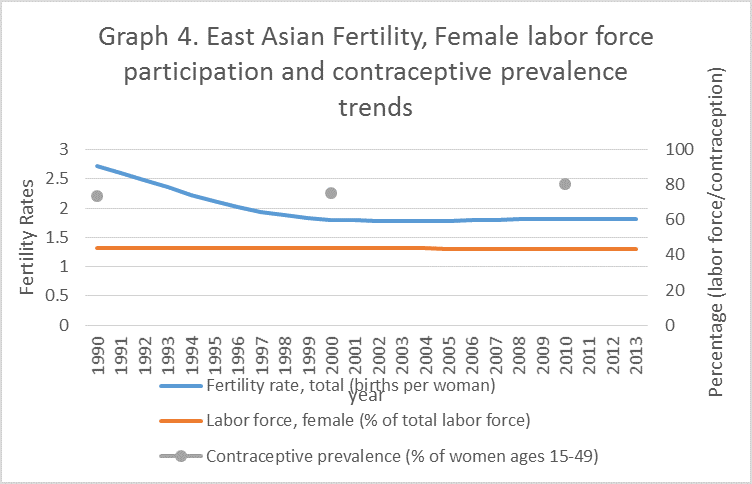
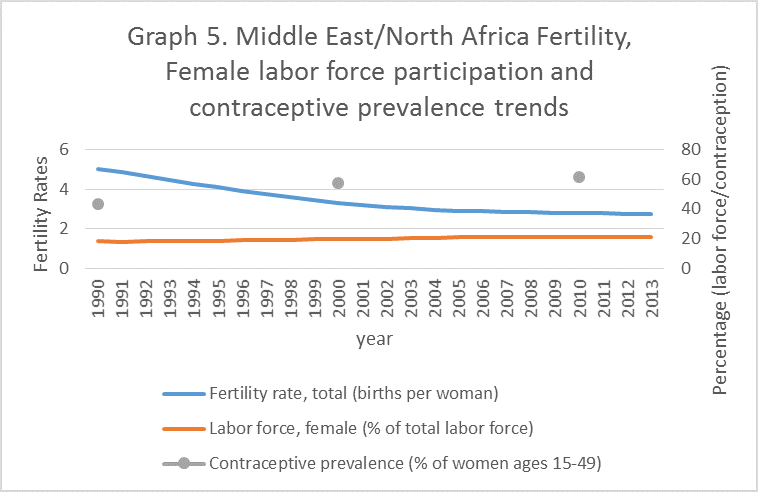
Graphs 4-6 records data for the three regions from 1990 -2010. It measured the changes through time of fertility rates, percentage of women in the labor force and the prevalence of contraceptives. All three regions witnessed the increased use of contraception: East Asia increased from 73% using contraception to 80% usage rates; Sub-Saharan Africa from 15 to 25%. Graph 4 depicted this increase in the East Asia/Pacific region and showed a roughly steady participation by women in the labor force. Aside from East Asia, there existed strong correlation between labor force participation by women and declining birth rates (-0.95 for both Middle East and Sub-Saharan Africa). Finally, a separate graph (Graph 7) was drawn for China by plotting its decline in fertility rates over time for the purposes of examining the effect of public policy on fertility. We see that fertility rates in China declined drastically from 6.3 in 1965 to 2.71 in 1980. Declining further until 1998, and it has held steady at 1.6 since then.

4). Conclusion

This paper studied the relationship between fertility rates and population density and prospective underlying causes for changing population densities. We found that there was a clear negative correlation between declining fertility rates and each of the individual factors measured: GDP per capita, female labor force participation and the prevalence of contraceptives. However, we cannot isolate any of these individual factors and point to it as a cause for declining fertility rates. Each of these factors are not mutually exclusive and acted to reinforce one another as well. For instance, increasing GDP per capita can increase contraceptive use since more women now could afford these new products; or along the lines of Boserup, increasing population could lead to greater density and more innovations and technological changes, which in turn increases income and decreasing the fertility rates. (Boserup) And it is possible that the variables examined are the result rather than the cause of fertility decline (i.e. a demographic “dividend” from having less child dependency) (Factsheet). The causes of fertility decline were complex and this paper only sought to examine a small amount of variables that can affect it.

The effect of family planning and government measures were more open to debate. For example, in China, we saw that fertility rates has already fallen to 3 by 1980, the year the so called “one-child policy” was implemented (Moore). Thereafter, the fertility rates steadily decreased, but based on comparisons with East Asia as a whole, it appeared that this fertility decline would have taken place even without the said policy. What appeared to be more significant in causing fertility decline remained the other factors discussed, such as increasing economic performances and contraception usages.

Limitations of the study:1. Exclusion of certain countries and regions from the study. There are incomplete information (missing fertility rates etc.) for certain country’s data. Therefore, these countries are not included in the regional averages. Some of the countries excluded have very high population density and relatively high birthrates (ex. some Pacific Island states) which are both factors we are attempting to draw conclusions from in this paper. This exclusion could result in errors that can affect our conclusions based on the graph and these data, once included, may result in slightly altered correlations and possible interpretations.

  1. Numerous other factors that may affect population density and fertility rates. There are other underlying factors that can cause a decline in fertility rates other than the economic development, women’s participation in the economy or government policy. Even though fertility rates negatively correlates between each of these factors, we cannot conclusively state that fertility rates rate is caused by these factors. Other factors that may be impactful include women’s educational attainment, and increasing quality and quantity of public health services. More studies need to be done how the effects of some of these other factors may directly impact fertility rates.
  2. The factors that contribute to fertility decline are not fully independent of one another. For example, the increased distribution of contraceptives may be the result of increasing economic output as measured by increases in GDP per capita, which enabled women to purchase contraceptives in the first place. The variables measured in this study can and do influence each other. Therefore, the conclusion drawn (that a negative correlation exists between fertility rates and all the other variables), may be an oversimplification.

Appendix:

Graph 1, Middle East GDP Graph 2, East Asian GDP Graph 3, Africa GDP Graph 4, East Asian labor force Graph 5, Middle East labor force Graph 6, African labor force Graph 7, China's GDP

Works Cited

Boserup, Ester. “Population and Technology in Preindustrial Europe.” Population and Development Review 13.4 (1987): 691-701. JSTOR. Web. 01 Apr. 2015.

“Contraceptive Prevalence (% of Women Ages 15-49).” World Bank, n.d. Web. 01 Apr. 2015. <http://data.worldbank.org/indicator/SP.DYN.CONU.ZS&gt;.

“Dropping Birth Rates Threaten Global Economic Growth.” CBSNews. CBS Interactive, 7 May 2014. Web. 01 Apr. 2015.

“Fact Sheet: Attaining the Demographic Dividend.” Fact Sheet: Attaining the Demographic Dividend. Population Reference Bureau, n.d. Web. 01 Apr. 2015.

“Fertility Rate, Total (births per Woman).” World Bank, n.d. Web. 03 Apr. 2015. <http://data.worldbank.org/indicator/SP.DYN.TFRT.IN&gt;.

“GDP per Capita (current US$).” World Bank, n.d. Web. 01 Apr. 2015. <http://data.worldbank.org/indicator/NY.GDP.PCAP.CD&gt;.

“Labor Force, Female (% of Total Labor Force).” World Bank, n.d. Web. 01 Apr. 2015. <http://data.worldbank.org/indicator/SL.TLF.TOTL.FE.ZS&gt;.

Moore, Malcolm. “What Is China’s One-child Policy?” The Telegraph. Telegraph Media Group, 30 Oct. 2014. Web. 01 Apr. 2015.

Agricultural innovations in Israel: reasons and impacts

Israel is a land of many innovations and the birthplace of many progressive technologies. Here in this blog, I would like to discuss one of the areas that Israel has excelled: the agricultural sector. We often speak of necessity as the mother of all inventions and this is the absolutely true with regard to Israel. The nation is covered over 50% by desert, most of which is in the Negev desert to the south. The amount of land that is agriculturally productive is extremely limited, and whatever land that is suitable for growing crops faced the perennial problem of irrigation. Massive water projects in diverting the water from the Jordan River has been successful, but nevertheless, water conservation is key.

Many companies in Israel is currently working on developing new technologies that relates to water conservation. The most direct way to conserve water is to shorten the growing period for food crops. Many multinationals – Flextronics, Dupont, and even Google[1] – is interested in how to apply the Israeli technologies to market it to the world. The aim of these partnerships is to link up many Israeli startup firms with other large multinationals (most of which is based here in the US) and to leverage off the larger company’s capital, labor pools, counseling, coaching, etc, to develop the products or services that these Israeli companies need to market its product overseas and to ensure its survival in the face of global competition.

Many Israeli partnerships with firms in California is already very well known. The regions (the interiors of both California and Israel) both faces water shortages that disrupts the growing season, despite the strong amount of available sunshine and other factors that are conducive to productive agriculture. Israeli products found a strong demand in these regions of California. What is perhaps less known is the fact that many Israeli companies and technicians also involve themselves extensively with other countries around the world, such as China and India, which desires help to make its agriculture more productive. As world population increases and the amount of land available for crop growing decreases (due to urban sprawl, pollution, etc), there is now more of a demand for more efficient agriculture. Israel can capitalize on this trend of growing global demand and expand its market positions around the world.

We often speak of Israel as a startup nation that encourages innovation, in large part due to compensate for its lack of natural resources and other means of economic growth. While this is true to some extent, the impact of Israeli companies and their innovations are far more than simply economical. In many ways, it is also beneficial for Israel as a nation on the international stage. By encouraging partnerships between Israel and other nations in the form of business and technological exchanges, Israel can also inspire a feeling of goodwill from other nations around the world, which will benefit it diplomatically. In international diplomacy, we often speak of a “hard” versus “soft” power, and the combination of these two is what makes a nation strong. While Israel certainly already has plenty of “hard” power, defined as absolute military or economic clout, it can also increase its soft power, which is defined as cultural or scientific/technological prestige. Israel, through its networks of businesses that assist other nations around the world with their respective agricultural projects, can increase its global influence in areas that might never have anything else to do with Israel. This increase in Israel’s soft power will no doubt last longer in the long run, since respect for a country for what they are and what they do will outweigh any other form of diplomatic tools on the world stage.

As we can see from this discussion, something as small as having a small start-up focusing on agricultural innovations can go a long way in helping a nation to succeed on the international stage. The current path of encouraging innovation as pursued by the government and society of Israel will benefit the nation and the world in the long run.

[1] Google Shows Interest in Israeli Agritech Companies; http://www.israelagri.com/?CategoryID=482&ArticleID=1039

On Iran’s nuclear program: an alternative view

Iranian nuclear program has drawn a significant amount of international attention – and condemnation – since it was uncovered in the early 2000s. While the issue is complex and multifaceted, I believe a few points should be examined. First, why is the Iranian government desirous of a nuclear program? And do the people really want it? Second, how should the rest of the world respond to it? Are the current negotiations with Iran the best way to approach this issue? And lastly, how should we all proceed from here?

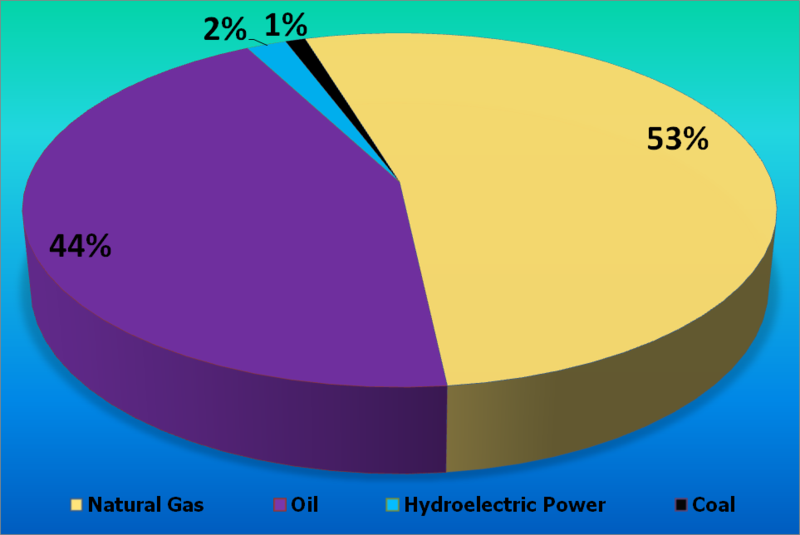
The Israeli historian Martin van Creveld once said that “Had the Iranians not tried to build nuclear weapons, they woul6a00d8341c4fbe53ef00e54f31467c8833-640wid be crazy.” Although his words may seem extreme, we need to understand what motivated the Iranian leadership to develop nuclear power, even in the face of mounting international oppositions. The Iranians’ own argument is that they need to secure their own energy needs in the form of nuclear power. This argument is hardly plausible: Iran is sitting on the world’s second largest reserves (after Russia) of natural gas. Iran’s South Pars gas field alone is estimated to contain 14×10^12 m3 of gas, around 5.6% of the entire world’s prove gas reserves. Moreover, the country contains the 4th largest reserves of oil in the world. Iran’s energy needs can largely be satisfied by its oil and natural gas, as can be seen in the chart below. iran energyIf energy security is not the real reason, then what is? The true reasons for such a program, I believe, includes the following:
  1. Scientific and cultural prestige: Let’s imagine that the Iranians do not in fact want to build a nuclear weapon (a highly unlikely assumption for reasons that I will explain later), the mere fact that Iran is capable of developing advanced technology is something that the Iranian government can be proud of. In Iran, like many other parts of the world, scientific advances symbolizes the greater progress made in a society. The Iranian government sought to legitimize itself by promoting science and technology (much like the Soviet Union spent tremendous efforts in space exploration to legitimize the ideology of Communism). The Iranian people want to see progress being made in a variety of different fields, whether it be a rocket launch or a prospective nuclear power generation plant. Iran is gaining prestige by possessing those technologies. In a sense, scientific prestige is also tied into cultural prestige. We need to remember that Iran is more of a historical civilization than a nation-state in the modern sense of the word. The Iranian people had inhabited the Iranian Plateau for thousands of millenniums, and for much of that period Iran (or Persia, as it is known for most of its history), is a leading force among the world’s nations, and not merely in technology. It is in early modern times that Iran had fallen behind. In a way, many Iranians want to regain that sense of pride which have belonged to them historically. As heirs to a rich cultural heritage, Iranians today no doubt want to relive a part of its ancient glories; developing nuclear powers along the lines of other advanced nations will symbolize a part of this regaining of prestige.Mideast-Iran-Nuclear-_Horo2
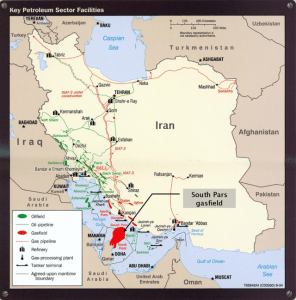
  2. Competition from regional powers: Let’s take a look at how the world appears from the position of Iran, and why its nuclear ambitions will likely lead to nuclear weapons. Geographically, Iran couldn’t be in a more dangerous position. As the map below shows, Iran is surrounded by potential or probable enemies. To its west, Iraq, despite its Shia majority (the majority religion in Iran), is embroiled in a complicated civil war with the radical Islamic State (IS). Further west, we see a similar situation in Syria, where Iran-backed government of Bashar al-Assad is fighting a multi-front war against IS and moderate rebel forces. Each of these governments, if they fall, would produce a serious threat to Iran itself; and these are just the militant organizations. Organized threats by nation-states posed a bigger problem still. In its southwest, across the Persian Gulf, the Kingdom of Saudi Arabia is ferociously anti-Iranian and possesses a powerful modern military and an alliance with the United States; other Sunni Gulf States are no more friendlier. Further to the west, Iran faces the strongest military power in the region in the state of Israel, which had spear-headed efforts to contain the Iranian enrichment program. Further to its north and east, Russia, China, Pakistan, and India are all nuclear powers. In such a dangerous neighborhood, Iran felt that by developing the bomb, it can achieve a sort of parity with the other regional and global powers, at least in part to compensate for its relatively conventional forces.
  3. Security and Geopolitical leverage: In a point related to the second one, we need to be aware of the fact that Iran really has no natural allies. Culturally, it is the product of thousands of years of Persian civilization centered in the plateau of Iran, influenced by the forces of Shia Islam for centuries (today, an absolute majority of the world’s Shia Muslims lives in Iran), and the rise of political Islam in the form of the Iranian Revolution of 1979. For good or bad, few other countries possess such a unique historical experience. While this is a point of pride for many Iranians, at the same time, this also meant that Iran cannot count on any natural allies in the sense that the UK can rely on the US or Kuwait can rely on Saudi Arabia. The allies and friends it does have among governments are less than appealing: Iraq is bogged down in a struggle of a sectarian nature between Shia-dominated government and Sunni militant Islamists; likewise Syria is fighting its seemingly interminable civil war; the militant group Hezbollah in Lebanon is considered an ally and a way for Iran to project power into the eastern Mediterranean, but is categorized as a terrorist group (its military wings at Shia_Crescentleast) by most governments around the world. Strategically, Russia can be considered an ally, but that nation is struggling in the face of western sanctions for its involvement in the Crimea and a falling oil price. (For a discussion of how falling oil prices are influencing foreign policies in Russia and Iran, see here). Iran is looking for new partners in China and India by offering them energy security; but this venture will be unlikely to result in any serious partnerships, especially if this partnership would result in possible international retaliations by the West. Iran is therefore left to defend itself against a myriad of threats. In this case, a nuclearized Iran can protect itself, or so the Iranian leadership believed, from military blackmailing. At the same time, Iran can project its power in what is known as the “Shia Crescent”, an area encompassing Iran, Iraq, Syria, and Lebanon, shaping itself into a regional power. Iran believes that thus nuclear power adds more muscle to its voice in regional and international affairs.

Needless to say, no matter what the reasons are for Iran’s acquisition of nuclear power, the rest of the world cannot be happy about the emergence of another potential nuclear power. However, the present countries that possess nuclear powers are in fact rebuilding their own respective nuclear arsenals even while they are denouncing the Iranian’s attempts to do so. We see that the rest of the world has been upgrading their own nuclear arsenals as well. In a recent article on Business Insider, the dangers of a nuclear war is emphasized more than ever before. However, the difference is that Iran is widely seen as an irresponsible government, and weapons in the hands of such a state is a worrying fact. But how should the rest of the world respond to it? Along the lines of journalist Fareed Zakaria, I believe that there are two main ways for the world to respond: 1. Forcing a Regime Change, or 2. Forcing a Policy Change. Let’s briefly define what each option meant and discuss their relative merits later:

  1. Regime Change:

In essence this would involve the fomenting of dissent, support democratic political movements, and with outside help in trying to overthrow the government of Iran in one form or another. Most likely, the United States would be the leader in such an effort. In the meanwhile, the US and other parts of the world should not have anything to do with Iran since it is an illegitimate government in their eyes. In the views many, the only way to properly address the nuclear situation with Iran is wait (or help) the government to change and then deal with them later.

  1. Policy Change:

This would mean that we will actively engage with the present government of Iran, treating them as an equal partner in these discussions, and really accept the fact that the government of Iran, however repulsive, is here to stay for some time to come. The dialogues will be conducted in an open manner and be peaceful in trying to reach a deal with Iran. For supporters of this option, they do not believe that this is a policy of appeasement, but rather, a step-by-step method toward achieving our objective, whatever they may be.

As a sophomore in college, I may not be in the best position to recommend foreign policy to those in the highest levels of government. But, nevertheless, I believe that here in the US and the rest of the world that does not desire to see a nuclearized Iran, have to decide on an option fast and not to oscillate back and forth between these two options. How can you possibly struck a deal with a government that you have every intention to help overthrow? Personally, I believe that the best option remains to bring Iran back into the international system, which it had been an outcast member since 1979, and to engage with it in more direct dialogue. We need to bring in international partners, which must include China, India and Russia, to discuss options with the Iranians on what to do. We must make Iran as an equal partner in its negotiations and not treat it as a criminal state. We need to recognize Iranian interests and why they sought to nuclearize themselves and to stress our own positions and concerns in why we do not want to see a nuclear program: no, it is not that we desire to encircle Iran on all sides, and no it is not that we desire to see a weakened Iran that is susceptible to invasions at any given moment. There are too much distrust and misconceptions between Iran and the West at the moment, each is mistrusting the other’s intentions. Therefore, if we can build an international coalition on resolving the issue, we can legitimize our intentions and make the Iranians understand that it is in the interest of the rest of world for them to denuclearize.

Current policies in delaying Iran’s nuclear programs have many merits to them. Firstly, the alternative, that of calling Iran to immediately destroy their nuclear facilities, will only strengthen their resolves in continuing to build them. If not in open, then in secret. Therefore, delaying what Iran has been attempting to do, by years (a very possible prospect), leaves the rest of the world with more options in dealing with the government. But more importantly, it buys the rest of the world time. The structure of government itself may likely change with the passage of years. I do not necessarily mean a revolution, but rather a gradual process of liberalization that will see a new generation of Iranian leaders that do not want to confront the world and or is filled with xenophobia, but rather sought peaceful coexistence. Younger generations of Iranian do not have the fervors of religious fanaticism that may have characterized some of their parents; in fact, I believe that many young Iranians today want to embrace the international system and be a part of modern society. I believe that will the passage of time, Iran can be a more responsible stakeholder in the international system and we can work with Iran toward this issue. However, in order to do this, we must first talk openly with Iran.

The importance of continuing dialogue with Iran cannot be overstated. If left isolated, Iran will retreat into itself and develop and deepen a paranoia of the rest of the world and perhaps the unthinkable will happen: a nuclearized Iran ready to use its weapons on its neighbors and beyond. As a historical analogy, imagine what if Henry Kissinger had never traveled to China to open up dialogue with that secluded nation, China today would possibly have been another North Korea: a government that is isolated and clung to an outdated ideology with a belligerent attitude toward the rest of the world. But to the credit of the US government (both the executive and the State department), rather than seeing this happen, the US government actively engaged with Chinese leadership and brought China into the international community of nations; a community that China has a stake in. In a similar line, I believe that by keeping the dialogue option open with Iran, we can hope to make some progress. Of course, this can only happen with Iranian commitment as well, and it needs to tone down the rhetoric against its neighbors and their allies, most notably Israel and the United States; it needs to show real commitment in following through with its promises; but above all, Iran needs to see that it is to its own security and benefit that it becomes a part of the international system rather than a challenger to it. Perhaps, eventually, Iran will be able to develop its own peaceful nuclear program, much as how Japan and South Korea has developed them, without feeling the need to weaponize it. All of these will likely take an enormous amount of time, likely decades; but I believe that in the end, the path of continued negotiations and dialogues with Iran will be preferable to any other alternative.

For related topics see:

Resource dependency, oil price decline, and the reshaping of the international order

Oil companies and the ethics of overseas investment

Resource dependency, oil price decline, and the reshaping of the international order

In today’s economy the need for a diversification of the economy is more important than ever. In particular, at the time this post is written (February 13th, 2015), oil prices are its lowest prices in years as a result of the proliferation in supplies and sluggish global demands. All nations, whether they are a net importer or a net exporter, are feeling this squeeze on their national income.

The impact of this fall in oil prices are wide and cuts deep on those countries that depend on this resource. Witness the current crisis that Russia is facing: an economy that that facing sanctions on its key pillars: defense, which is a legacy of the Cold War era competition; energy and mining, both of which are resource based and depends on the global commodities market, and financials, which are in large part the results of capital inflows as a result of the sales of natural resources). And now, with the decline in the price of oil, Russia is finding less and less takers for its petroleum and natural gas reserves, while at the same time, Europe is moving away from the Russian gasman by investing more in green energy and meeting their energy needs through other needs, such as natural gas imports from America. As a result of this, investors have been pulling money out of Russia, resulting in a steep fall in the value of the ruble, a fall of around 50% at its lowest point. While the fall of the Ruble had stabilized recently, the impacts have been far reaching and severe, and it may take years for Russia to come back from this deep crisis. (on oil and national corruptions, click here.)

And Russia is not alone in facing such a challenge to its state coffers as the country tries to balance its budget moving forward to 2015. Iran, whose economy is even more dependent on the selling of natural resources, has been even harder hit. The stagnating national economy can only be expected to be getting worse in the coming years. Likewise, Venezuela, a nation that stylized itself as an example of 21st century socialism, is in fact heavily dependent on oil to fund many of the social programs that the country is currently undertaking. A fall in its chief exports is likely to cause price rises on a variety of goods, such as food and fuel, which are heavily subsidized using state oil revenues. Moreover, it will likely increase the populace’s discontent with the national government, challenging the government’s very own legitimacy.

The overdependence on natural resource is what is often termed a “resource curse” or the “Dutch disease”, based on the supposingly devastating effects of the discovery of natural gas off the coast of the Netherlands on the Dutch domestic industry during the 1970s. In short, the theory suggests that with an increase in oil revenue, which are in essence easy money that does not take much investment, the government and society as a whole will move away from other sectors of the economy such as manufacturing and research and development. There is simply too little incentive to focus on growing the economy long-term when in the short-term, easy cash flows are being generated. The long term determinants of growth, which includes the accumulation of capital and the improvements in technology (according to the Solow model), are ignored in favor of the easy money that the country can easily receive from selling its natural resources. The government may then distribute this oil wealth to the populace to increase its popularity, or to pursue its own political agendas abroad (Iran in the case of interventions in Iraq and Syria, Russia in the case of its Near Abroad of Georgia and Ukraine). Such a huge amount of easy money in good times will give the government tremendous power in international affairs, leading to the state being called an “energy superpower”.

Another important point to note, as no doubt many have already observed, is that resource dependency tends to breed authoritarian forms of governance. In any case, a government that receives 60% or more of its revenue from selling its natural resources tends to be less free than those that are more resource-scarce. There are a couple of reasons for this:

First, remember the slogan of the American Revolution, “No Taxation without Representation”? Have you ever considered how true this is literally? In other words, if a government do not tax its citizens, or at least not tax them as much, does the government still have responsibility to provide its citizens with a representative form of government? In the cases of the oil-rich countries, when the government’s revenue does not depend on the cooperation of its citizens, there is little incentive for them to give rights to their citizens for a form of participatory democracy. Any sort of social benefit provided to the country’s citizens can be thought of as a “gift” to the populace, since it is not with their tax dollars that these programs are funded. The government may not feel like they owe their citizens anything, and thereby giving the government more leeway in pursuing their own goals.

Secondly, as this is a national resource, the ones who will be managing it most closely will likely be government bureaucrats, acting on behalf of the entire population. Obviously, such an arrangement will lead to corruption, cronyism, oligarchies, etc, since so much money and power are concentrated in the hands of so few people. This is simply too tempting for government officials not to abuse their power to enrich themselves in one way or another. Often, governments will sought to protect their own interests by clamping down on those who threatened their monopoly on the national wealth, leading to increasing authoritarianism and undemocratic forms of governance. For further discussion on oil and global corruption see here.

How is all of these going to affect the international arena as we move forward in 2015? It is interesting to note that the three countries we have mentioned thus far – Russia, Iran, and Venezuela – are in one sense or another a geopolitical rival of the United States. As we have previously noted, increased amounts of oil revenue will leads to more undemocratic forms of government, which in turn leads to more irresponsible governments, which are more likely to engage in forms of military adventurism and assertive foreign policies. I would argue that Russian would not have invaded Georgia in the summer of 2008, when the world’s attention has been focused on the Beijing Olympics, if it had not been for the fact that oil prices had been at its historic heights and much of Europe depends on the oil and natural gas provided by Russia. The anti-western rhetoric of Hugo Chavez would not have gained traction had it not been for the fact that Venezuelan oil had given him the economic foundation and confidence to do so.

But with the dramatic decline in oil prices since the middle of last year, all of these geopolitical conditions are bound to change. The large net oil exporters, not only Iran, Russia, and Venezuela, but also US allies such as Saudi Arabia, are going to see a drastic decline in their influence, which will require them to adjust their respective foreign policies accordingly. Let’s go through the three main powers we talked about here one at a time:

  1. Russia: The current involvement of Russia in the Ukraine started when the oil prices were still relatively high, and when American natural gas exports to Europe are only starting. But now, a year later, Russia simply no longer have the sort of leverage to keep the European Union from fighting back against Russia designs, whatever it may be. My prediction for the current conflict would likely be for Russia and the separatists to drag things out a little longer to maximize their gains and to destabilize the situation in the Ukraine further and then to come up with a peace treaty with greater autonomy for the east of Ukraine in mind. In the end, Russia’s geostrategic goal is not necessity annex the region as it did with Crimea, but rather to influence it in such a degree that Ukraine’s foreign policies would still have to take Russia into consideration.
  2. Iran: Without a sufficient source of oil revenue, the Iranian backing of Assad’s regime in Syria and the ongoing fight against the Islamic State will be in jeopardy. This compounded with the continuous international actions against Iran will seriously hurt the Iranian nation. Therefore, it is likely that we will see an Iran that is more willing to compromise on many key issues, from Syria to its nuclear program, diminishing somewhat its power in the Middle East.
  3. Venezuela: The populist government of President is already under tremendous economic and political strain from before the fall in the prices of oil. And now, if oil decline continues, we may see increasing pressures for political reforms in Venezuela.

And to talk about it briefly, we may also expect to see the relative increase in power among the net oil importers, which includes large sections of East and Southeast Asia, and non-oil producing South America. Although, this increase in power for the net importers may be less than the decrease in power of the oil exporters, in part because there simply more oil importers than exporters.

Significantly, countries that are energy poor but are growing through economic means, such as Turkey and China, may become stronger than before. Their freedom to maneuver will likely increase, and they may become more assertive in their respective neighborhood. The impacts of their rise will remain yet to be seen. In political relations, we speak of both “hard” and “soft” powers, with “hard power” defined in military means, while soft power is described as cultural influences. Country’s national power is no longer measured by what they can produce or how they can impose their wills on the world. Some countries, particularly in Europe and East Asia, may see themselves benefitting from the oil decline as beneficiaries of tourism and places of interest for the entertainment industry. Whatever the shift in geopolitics may be, we may be guaranteed that we will see a shift in the international order in the coming years (assuming oil prices remained low), where countries that have obtained enormous power through using energy as a chess piece will see a decline in their influence and more power will be shifted toward nations with strong economic performances and a more solid source for their power, whether they be strong economic performers like China or Turkey, or strong “cultural powers” like Korea or the UK.

On China’s Anti-Corruption Drive

In China, ever since president Xi Jinping launched his promise to crack down on corruption both high and low (or to use his phrase, “striking tigers and flies at the same time “), a dark cloud seemed to have engulfed Chinese politics. The corruption drives seemed to have consumed absolutely everyone, and has been the talk both within China and abroad. Hardly a day seemed to go by without some “high ranking official” getting sacked for alleged embezzlement, misconduct, or plain neglect of official duties. Yet, despite all the fanfare, how much of an impact is the crackdown really making?

First, it needed to be said, this official drive against corruption has been popular with the Chinese people. Official corruption has long been a source of anger among most Chinese and they resent the way that government officials are able to use their given authorities to further their own ends. To many Chinese, the direct actions from the Central Government in Beijing are the only ways for which corruptions can be combated, since the national government are the only ones able to protect the defenseless people from the greedy and vicious local officials.

President Xi’s role as a corruption buster would hardly be the first in the long history of China, although it is arguably the largest such drives since the Communist victory in 1949. Throughout China’s imperial history, corruption has always been present in China’s vast bureaucracy. Therefore, it is the duty of the imperial court and the emperor to periodically send out officials from the capital to the provinces to inspect local officials and to hand out punishment to those officials found to be corrupt. One of the key reasons for the Communist victory of 1949 is the ability of the Communist leadership to present an image of themselves as the “incorruptibles”, and portraying their opponents, the Nationalists, as a group of corrupt bandits.

Now fast-forward to 2014, and we see that if we substitute the imperial bureaucracy with the Party bureaucracy; the imperial court with the Central Government in Beijing; the traveling officials of the court with the Central Commission for Discipline Inspection (a branch of the Central Government); and the emperor, dare I suggest, with the General Secretary of the Communist Party, Xi Jinping himself; and we then see a parallel system of combating corruption. Namely, by arresting those responsible and seize their ill-gotten assets. However, if we look at this method of combating corruption, we see that it is neglecting the true causes that enabled these corruptions to happen in the first place. Arresting officials may be easy to do in the short run and may discourage corrupt practices briefly. Eventually, the energy of a government get tired out and it would declare the corruption drives a success and wrap it up. This sort of solution could not be sustainable in the long run and is merely a stop-gap measure. Or to use our historic analogy, one key reason why every dynasty falls in China is its inability to handle reforms and had to rely on temporary measures to stop these failures in governance; eventually, only a popular uprising and revolution is able to change the status quo.

I’m sure this point is not lost upon the officials who instigated this sort of investigations in the first place. The question we must ask ourselves then is why this corruption drive if everyone knows it is destined to fail? I can divide up the reasons as follows: first, the desire to appear responsible and to gain popularity among the people, and gain credibility and praise for its leaders, most important of which is Xi Jinping himself; second, more importantly, to use this opportunity to eliminate domestic rivals and challenges to the ruling group’s rule through the process of arrest and public humiliation via a media campaign; and thirdly, as an explanation to the method of anti-corruption drives, to preserve the legitimacy of the party and to root out some of its abuses without actually loosening the ruling party’s hold on power.

The Chinese public, like publics everywhere, are eager for sensational news (how much funds he embezzled, how many apartments has he gotten, how many mistresses are being supported by him), and is willing to let the sensational take over the need for true substance, which is the need for institutionalized reform. For those in the highest levels of government right now, this ability to satisfy a public that is eager to combat corruption and see the downfall of corrupt officials makes the corruption drives worth the effort. Boosting its image among the public and gaining their support, the government is able to have a freer hand in dealing with other domestic issues such as the problems relating to environmental degradation; or in the international arena, such as the island disputes in the East and South China Seas. President Xi himself, by seeming to remain aloof from charges of corruption (while in reality his family assets are no less questionable), can gain the credibility needed to implement his political agendas.

In the opaque environment of Chinese politics, power is never as secure as it looks to the outsiders. There exists numerous factions with the Party itself, jousting for influence with one another. President Xi had gained power over the years by outmaneuvering his political opponents, most important of whom is Bo Xilai, a disgraced former Party regional leader who had been a key contender for national leadership and who was now found guilty of murder and numerous corruption charges. Now, as a part of his official anti-corruption campaign, Xi is moving against some of his other opponents such as Zhou Yongkang, an ex-security chief arrested for corruption and leaking state secrets. Indeed, the corruption drive, despite its wide scope, has targeted very specific individuals and groups that have opposed Xi in the past and are threatening his own power base. Arguably, partly as a result of the anti-corruption campaign, which rendered his opponents either in a state of confinement or politically powerless, Xi is now arguably the most powerful Chinese leader since the death of Mao Zedong, the founder of the People’s Republic.

Finally, the Chinese leadership, in spite of its political agendas, recognized the need to combat corruption on a serious level, as it presents a threat to its legitimacy in the eyes of the Chinese people. However, the most obvious solution, which is implementing reforms to the structure of governance, will invariably involve the loosening the Party’s grip on power. This is unacceptable to all party officials large and small, past and present. Moreover, the political institutions of China or the lack thereof presents serious challenges to be overcome: the lack of an independent judiciary not subject to political pressures, the intimate relationships between officials and heads of state-owned enterprises (SOEs), the pervasive cronyism as a result of the system of political appointees that run from the top down, etc. All of these are serious problems that needs to be addressed. The problem is, the Party is unable and unwilling to address these problems without themselves becoming discredited and falling from its position as the ruling party of China. Therefore, it had to resort to the sort of temporary stop-gap measures that have been the hallmark of central governments since antiquity. (And, likewise, destined to fail with the passage of time)

I recall reading a book a while back about China, which compared China to the bus in the movie “Speed” (1994), which features Keanu Reeves, Dennis Hopper, and Sandra Bullock. In the movie the cops must prevent a bomb from exploding in the city bus, while keeping the bus hurtling through the streets above 50 miles an hour. Any speed below 50 miles an hour and the bus will explode. Needless to say, China is this bus. Now let’s imagine for ourselves that we are the national leaders of China, and we recognized that there is a ticking bomb on this China bus. However, to keep China going, we must keep the Chinese economy growing at over 7% per year, keep the machineries of government working, and to maintain order onboard. All of these while we are navigating through the streets of international relations, and make sure that no one else is affected by our problems. Corruption is that ticking bomb that will likely explode and will be a problem for the national government if left untreated. However, to tackle it, the national leaders must take into considerations the numerous other factors at play. For now at least, it is simply easier to keep China going forward by developing its economy and distracts the people from the problems the nation is facing, than to tackle issue of corruption through institutional reform.

For more on the Chinese housing market, click here. For more on corruption in the oil industry worldwide, click here.

Housing market and its implications for the Chinese economy

Currently (as of late October, 2014) the Chinese housing market is at a historic high, yet housing prices have increased only modestly this year. This got me to thinking, could the booming Chinese housing market be at a turning point, and is perhaps already on a road to decline? Recently, I have read that some in China have begun to starting selling their houses, and that those who sells it the most are those with government connections. Perhaps they have some insider information on the Chinese government’s attempts to curb this housing bubble, or that they know something the rest of people in China do not? In terms of policy, I believe the best way to do this is through tightening the credit market, and raising interests rates. Its been well known that the government have been trying to do curb the proliferation of non-performing loans and easy money that is circulating in the country, and if the central bank indeed decided to raise the interest rates, the effects could be extremely profound, not only for the housing market, but for the entire economy. The construction boom occurring in China is fueled by the essentially free-loans that real estate developers have been getting through state-owned banks, many of these using their political connections. And now the housing supply have far outstripped the demand for housing, yet the price remains artificially high, with most of the new buying coming from speculators. In this situation, a crash is inevitable. Many have warned that crash is impending for many years now, yet the market took the warning in stride, perhaps factoring in the risk. Yet investors still believed that the boom is sustainable. In such a situation, even the slightest sell-offs can induce a panic.

Let’s look at a hypothetical situation. Going back to the central government’s actions. If the central bank (People’s Bank of China) had raised interest rates, the money fueling the construction would dry up, speculators would not be able to gain the necessary funding for them to construct new homes and further speculations in the market can no longer be financed. In this case, the housing will tumble investors leave the market en masse. The non-existent demand would not be able to prop up the price or to slow the decline. A fall in housing price will likely mark the beginning of a general slowdown in the Chinese economy for several reasons: firstly, the housing sector and construction is one of the largest sector in Chinese economy and much of the economy is tied to real estate in one way or another. The housing sector stimulated demands for steel, concrete, etc, and provided employment for millions of migrant workers coming into China’s cities each year. A fall in construction would result in overall lower aggregate demand in the economy since it is such a major component. Secondly, many companies uses real estate as asset to back their loans, and with a rise in interest rate as well as a fall in the housing prices, more loans would be much harder to get and the companies will get less of it because of the decline in their property values. As cheap loans have been at the basis of Chinese economic growth for years now, it is reasonable to expect that as this cheap loans dry up, the Chinese economy (which is driven by new investments) would slow as well. Non-performing loans, especially at the provincial and municipal levels in China would inevitably further exacerbate the crisis. Many state-owned-enterprises are burdened by high amounts of loans and a rise interest rates would cause them to become financially insoluble, a risk the Chinese government simply cannot take.

Of course, these risks have passed through the mind of the government officials as well, and especially since many government officials have ties to the commercial world, they would not be likely to push for legislations that would damage their commercial holdings. (On corruptions in China, click here). No one wants the housing market to decline, since everyone has so much tied into it. A decline in housing is not likely, or at least the government will sought to delay it as long as possible. However, the need to curb the wild growth in the market is needed. Once again, as many commentators have stated before, the Chinese economy needs structural reforms in order for it to sustain the levels of growth. The deep and complicated ties between political bodies, regulatory agencies, banks, developers, speculators, etc. causes the rise in property values in the first place, and now it has grown to an unsustainable level. The task before the government is therefore to curb the wild proliferation of loans without damaging the rate of economic growth and find a solution that is acceptable to all parties involved. A herculean task indeed! It remains to be seen how the government will be able to manage this crisis.