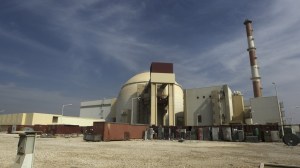
On Iran’s nuclear program: an alternative view

Iranian nuclear program has drawn a significant amount of international attention – and condemnation – since it was uncovered in the early 2000s. While the issue is complex and multifaceted, I believe a few points should be examined. First, why is the Iranian government desirous of a nuclear program? And do the people really want it? Second, how should the rest of the world respond to it? Are the current negotiations with Iran the best way to approach this issue? And lastly, how should we all proceed from here?

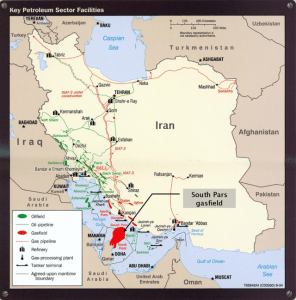
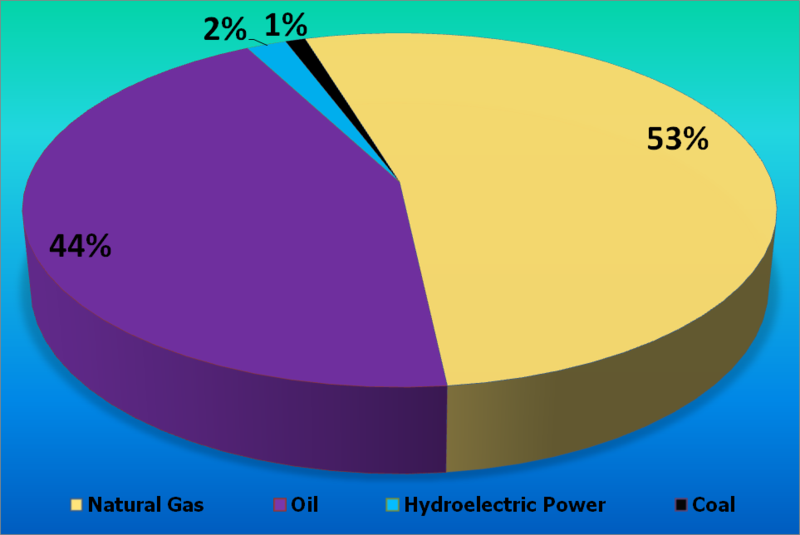
The Israeli historian Martin van Creveld once said that “Had the Iranians not tried to build nuclear weapons, they woul6a00d8341c4fbe53ef00e54f31467c8833-640wid be crazy.” Although his words may seem extreme, we need to understand what motivated the Iranian leadership to develop nuclear power, even in the face of mounting international oppositions. The Iranians’ own argument is that they need to secure their own energy needs in the form of nuclear power. This argument is hardly plausible: Iran is sitting on the world’s second largest reserves (after Russia) of natural gas. Iran’s South Pars gas field alone is estimated to contain 14×10^12 m3 of gas, around 5.6% of the entire world’s prove gas reserves. Moreover, the country contains the 4th largest reserves of oil in the world. Iran’s energy needs can largely be satisfied by its oil and natural gas, as can be seen in the chart below. iran energyIf energy security is not the real reason, then what is? The true reasons for such a program, I believe, includes the following:
  1. Scientific and cultural prestige: Let’s imagine that the Iranians do not in fact want to build a nuclear weapon (a highly unlikely assumption for reasons that I will explain later), the mere fact that Iran is capable of developing advanced technology is something that the Iranian government can be proud of. In Iran, like many other parts of the world, scientific advances symbolizes the greater progress made in a society. The Iranian government sought to legitimize itself by promoting science and technology (much like the Soviet Union spent tremendous efforts in space exploration to legitimize the ideology of Communism). The Iranian people want to see progress being made in a variety of different fields, whether it be a rocket launch or a prospective nuclear power generation plant. Iran is gaining prestige by possessing those technologies. In a sense, scientific prestige is also tied into cultural prestige. We need to remember that Iran is more of a historical civilization than a nation-state in the modern sense of the word. The Iranian people had inhabited the Iranian Plateau for thousands of millenniums, and for much of that period Iran (or Persia, as it is known for most of its history), is a leading force among the world’s nations, and not merely in technology. It is in early modern times that Iran had fallen behind. In a way, many Iranians want to regain that sense of pride which have belonged to them historically. As heirs to a rich cultural heritage, Iranians today no doubt want to relive a part of its ancient glories; developing nuclear powers along the lines of other advanced nations will symbolize a part of this regaining of prestige.Mideast-Iran-Nuclear-_Horo2
  2. Competition from regional powers: Let’s take a look at how the world appears from the position of Iran, and why its nuclear ambitions will likely lead to nuclear weapons. Geographically, Iran couldn’t be in a more dangerous position. As the map below shows, Iran is surrounded by potential or probable enemies. To its west, Iraq, despite its Shia majority (the majority religion in Iran), is embroiled in a complicated civil war with the radical Islamic State (IS). Further west, we see a similar situation in Syria, where Iran-backed government of Bashar al-Assad is fighting a multi-front war against IS and moderate rebel forces. Each of these governments, if they fall, would produce a serious threat to Iran itself; and these are just the militant organizations. Organized threats by nation-states posed a bigger problem still. In its southwest, across the Persian Gulf, the Kingdom of Saudi Arabia is ferociously anti-Iranian and possesses a powerful modern military and an alliance with the United States; other Sunni Gulf States are no more friendlier. Further to the west, Iran faces the strongest military power in the region in the state of Israel, which had spear-headed efforts to contain the Iranian enrichment program. Further to its north and east, Russia, China, Pakistan, and India are all nuclear powers. In such a dangerous neighborhood, Iran felt that by developing the bomb, it can achieve a sort of parity with the other regional and global powers, at least in part to compensate for its relatively conventional forces.
  3. Security and Geopolitical leverage: In a point related to the second one, we need to be aware of the fact that Iran really has no natural allies. Culturally, it is the product of thousands of years of Persian civilization centered in the plateau of Iran, influenced by the forces of Shia Islam for centuries (today, an absolute majority of the world’s Shia Muslims lives in Iran), and the rise of political Islam in the form of the Iranian Revolution of 1979. For good or bad, few other countries possess such a unique historical experience. While this is a point of pride for many Iranians, at the same time, this also meant that Iran cannot count on any natural allies in the sense that the UK can rely on the US or Kuwait can rely on Saudi Arabia. The allies and friends it does have among governments are less than appealing: Iraq is bogged down in a struggle of a sectarian nature between Shia-dominated government and Sunni militant Islamists; likewise Syria is fighting its seemingly interminable civil war; the militant group Hezbollah in Lebanon is considered an ally and a way for Iran to project power into the eastern Mediterranean, but is categorized as a terrorist group (its military wings at Shia_Crescentleast) by most governments around the world. Strategically, Russia can be considered an ally, but that nation is struggling in the face of western sanctions for its involvement in the Crimea and a falling oil price. (For a discussion of how falling oil prices are influencing foreign policies in Russia and Iran, see here). Iran is looking for new partners in China and India by offering them energy security; but this venture will be unlikely to result in any serious partnerships, especially if this partnership would result in possible international retaliations by the West. Iran is therefore left to defend itself against a myriad of threats. In this case, a nuclearized Iran can protect itself, or so the Iranian leadership believed, from military blackmailing. At the same time, Iran can project its power in what is known as the “Shia Crescent”, an area encompassing Iran, Iraq, Syria, and Lebanon, shaping itself into a regional power. Iran believes that thus nuclear power adds more muscle to its voice in regional and international affairs.

Needless to say, no matter what the reasons are for Iran’s acquisition of nuclear power, the rest of the world cannot be happy about the emergence of another potential nuclear power. However, the present countries that possess nuclear powers are in fact rebuilding their own respective nuclear arsenals even while they are denouncing the Iranian’s attempts to do so. We see that the rest of the world has been upgrading their own nuclear arsenals as well. In a recent article on Business Insider, the dangers of a nuclear war is emphasized more than ever before. However, the difference is that Iran is widely seen as an irresponsible government, and weapons in the hands of such a state is a worrying fact. But how should the rest of the world respond to it? Along the lines of journalist Fareed Zakaria, I believe that there are two main ways for the world to respond: 1. Forcing a Regime Change, or 2. Forcing a Policy Change. Let’s briefly define what each option meant and discuss their relative merits later:

  1. Regime Change:

In essence this would involve the fomenting of dissent, support democratic political movements, and with outside help in trying to overthrow the government of Iran in one form or another. Most likely, the United States would be the leader in such an effort. In the meanwhile, the US and other parts of the world should not have anything to do with Iran since it is an illegitimate government in their eyes. In the views many, the only way to properly address the nuclear situation with Iran is wait (or help) the government to change and then deal with them later.

  1. Policy Change:

This would mean that we will actively engage with the present government of Iran, treating them as an equal partner in these discussions, and really accept the fact that the government of Iran, however repulsive, is here to stay for some time to come. The dialogues will be conducted in an open manner and be peaceful in trying to reach a deal with Iran. For supporters of this option, they do not believe that this is a policy of appeasement, but rather, a step-by-step method toward achieving our objective, whatever they may be.

As a sophomore in college, I may not be in the best position to recommend foreign policy to those in the highest levels of government. But, nevertheless, I believe that here in the US and the rest of the world that does not desire to see a nuclearized Iran, have to decide on an option fast and not to oscillate back and forth between these two options. How can you possibly struck a deal with a government that you have every intention to help overthrow? Personally, I believe that the best option remains to bring Iran back into the international system, which it had been an outcast member since 1979, and to engage with it in more direct dialogue. We need to bring in international partners, which must include China, India and Russia, to discuss options with the Iranians on what to do. We must make Iran as an equal partner in its negotiations and not treat it as a criminal state. We need to recognize Iranian interests and why they sought to nuclearize themselves and to stress our own positions and concerns in why we do not want to see a nuclear program: no, it is not that we desire to encircle Iran on all sides, and no it is not that we desire to see a weakened Iran that is susceptible to invasions at any given moment. There are too much distrust and misconceptions between Iran and the West at the moment, each is mistrusting the other’s intentions. Therefore, if we can build an international coalition on resolving the issue, we can legitimize our intentions and make the Iranians understand that it is in the interest of the rest of world for them to denuclearize.

Current policies in delaying Iran’s nuclear programs have many merits to them. Firstly, the alternative, that of calling Iran to immediately destroy their nuclear facilities, will only strengthen their resolves in continuing to build them. If not in open, then in secret. Therefore, delaying what Iran has been attempting to do, by years (a very possible prospect), leaves the rest of the world with more options in dealing with the government. But more importantly, it buys the rest of the world time. The structure of government itself may likely change with the passage of years. I do not necessarily mean a revolution, but rather a gradual process of liberalization that will see a new generation of Iranian leaders that do not want to confront the world and or is filled with xenophobia, but rather sought peaceful coexistence. Younger generations of Iranian do not have the fervors of religious fanaticism that may have characterized some of their parents; in fact, I believe that many young Iranians today want to embrace the international system and be a part of modern society. I believe that will the passage of time, Iran can be a more responsible stakeholder in the international system and we can work with Iran toward this issue. However, in order to do this, we must first talk openly with Iran.

The importance of continuing dialogue with Iran cannot be overstated. If left isolated, Iran will retreat into itself and develop and deepen a paranoia of the rest of the world and perhaps the unthinkable will happen: a nuclearized Iran ready to use its weapons on its neighbors and beyond. As a historical analogy, imagine what if Henry Kissinger had never traveled to China to open up dialogue with that secluded nation, China today would possibly have been another North Korea: a government that is isolated and clung to an outdated ideology with a belligerent attitude toward the rest of the world. But to the credit of the US government (both the executive and the State department), rather than seeing this happen, the US government actively engaged with Chinese leadership and brought China into the international community of nations; a community that China has a stake in. In a similar line, I believe that by keeping the dialogue option open with Iran, we can hope to make some progress. Of course, this can only happen with Iranian commitment as well, and it needs to tone down the rhetoric against its neighbors and their allies, most notably Israel and the United States; it needs to show real commitment in following through with its promises; but above all, Iran needs to see that it is to its own security and benefit that it becomes a part of the international system rather than a challenger to it. Perhaps, eventually, Iran will be able to develop its own peaceful nuclear program, much as how Japan and South Korea has developed them, without feeling the need to weaponize it. All of these will likely take an enormous amount of time, likely decades; but I believe that in the end, the path of continued negotiations and dialogues with Iran will be preferable to any other alternative.

For related topics see:

Resource dependency, oil price decline, and the reshaping of the international order

Oil companies and the ethics of overseas investment

Questions of Identity: What defines our nation?

While having dinner at Berkeley’s dining commons, I was talking with an international student from South Korea. We were discussing our respective backgrounds. He was telling about how in South Korea, everyone identifies with one another, mostly in the form of culture and a similar language. He also mentioned an identifying factor that is hard to imagine in the US: race and ethnicity. In Korea, everyone belongs to the Korean “race” and this ethnic identifying factor is important in how Koreans see themselves as a nation. Then he asked me about something that he is confused about: What defines America? What is it that makes America stick together as a nation? Taken aback by this question, I couldn’t come up with a response. Then I stated that in the US, we do not value race, ethnicity, or even culture or language as much; rather, we as Americans share a certain set of values such individualism, respect for the law and democracy. However, as soon as I uttered those words, I realized how textbook like I sound, for these are the responses a course of American politics would probably gave. While he nodded in assent, I myself wasn’t entirely satisfied my response.

I have always enjoyed talking with international students, they often offers a fresh perspective on things that some of us born in the US or living in the US have taken for granted. Take the question of what defines the US for example, I have never thought about how bewildering the American Identity must have seemed to others. We are a nation that is multi-race, multi-religion, multi-cultural, and even multi-lingual (even though English is the de facto language of communication); indeed how is it that the American nation can stay together for so long?

After careful thought, I came to the conclusion our national identity is defined by several values. Most importantly, I believe that the US is defined by our inclusiveness to people of all different background, at the same time, we helped to foster immigrants and native-born citizens with a certain set of values that define America. And I believe the acquisition of an American identity happened in several stages. Firstly, those who immigrated to the United States are already breaking the bound with their old home country for political, religious, economic, and a variety of other regions that causes them to be no longer attached to their old identity. This is important because by forming a new blank slate (a table rasa if you will), a new identity can be imprinted upon them. Secondly, the gradually process of assimilation, or at least acceptance of American culture and the American way of life happens gradually. Through working, interacting with others, watching TV and accessing the internet, individuals can acquire a new perspective on things, a perspective that respects the diversity of American society. One key aspect of this acculturation to the US lies in the learning of the English language. This is not necessary merely for the cultural sense, but also to facilitate the understanding of what the larger society is about. Finally, the acquisition of an American identities is completed when citizens began to appreciate the political institutions of the United States, possess an understanding of the American political culture, and appreciate the nation for what it is. The acquisition of citizenship status is merely a formalization of the process of becoming an American. Throughout this process, a person began to identify more and more closely with the identity of an American.

However, this process of becoming an American is not without its challenges. At each stage of the process, a person may fail to progress to the next stage. For example, a person may remain so attached to their home country that they refuses to accept anything else even though they physically had come to America. Moreover, a person may refuse to learn the English language, or work, or interact with anyone else in the US. Or they may choose to fill their living rooms with foreign media and essentially recreating their home country in America, and isolate themselves from their surroundings. Under these circumstances, a person cannot become an “American” in the cultural sense of the word. And even when they chose to became a citizen, they did not truly complete the process of becoming an American in their heart and mind.

But what about remaining American after we began to identify with each other in a community? I believe that the decision of remaining American is an expression of our personal choice. We take pride in the community in which we belong in. Here, I draw upon the ideas of the famous French theorist, Ernest Renan, who argued that choosing to belong to a nation is a daily process of affirmation in a community. A nation is not a concrete concept that is defined by its borders, institutions, or other perceived similarities. Here in the United States, we are not defined by the 49th parallel North or the Rio Grande, but rather by a set of values and shared experiences that all of us treasure. The fact that we are living together and form a community is a testament to our continual will to be American; for if not, we can easily move away from this country, or “vote with our feet”. Each day, while we might not think of it as such, we are constantly reaffirming our desire to remain American by exercising our right to work, to express our opinions, and paying attention to the things going on around us.

However, this is not without its challenges as well. For the values that define us need to be constantly reinforced through more direct actions such as engagement with the political process by the simple act of voting. As Americans, we not only have rights but also responsibilities and if we neglected some of these simple acts, in a way, we forfeit our right to remain in the American community. If a nation is indeed a larger community of people that chose to remain together, then it is the duty for every member of that nation to constantly reaffirm their commitment to that community through their engagement with the nation and other members of the community. If the members of a nation cease to become engaged with one another, then the nation and the force that is binding it together will cease to function as a cohesive force.

This issue of what defines America affects me personally, for not too long ago, I became a citizen of the United States. As I was sworn in to become an American, I was overcame by a sense of apprehension. For what it is that I need to do, now that I am a member of the American “nation”. Should I behave in a different manner? Are my loyalties completely transferred over to this new nation? After the sworn-in ceremony, I did not feel any different than before, does this mean that I have failed in this transformative process?

Later, I recognized that the best way to feel at ease in this nation is to engage with its nation- and community-building process. By that I am suggesting that I will go out and vote and encourage others to engage in the political process as well, and volunteer my time and efforts and engage with the community around me. To appreciate on a daily basis what we do in this nation and to cherish the social, political, and cultural institutions that define the United States. But I above, I will continue to value and uphold the bonds that unites Americans together and to encourage others to do the same, making us stronger than ever before. A nation at its core is a community and it is the duty of each member of this community to develop a strong bond with one another, so that together we may progress into the future.

Oil companies and the ethics of overseas investment

Corruption is an issue I care about deeply, and this will be one of a series of writings on it. This particular post is focuses on politico-economic corruptions with oil companies, and is written in a documented research format. (For other articles on corruption in China, see here)

Oil companies are constantly seeking new ways to acquire new resources and to expand overseas. Oil companies are no exceptions. In their case, the quest for greater access – in the form of drilling rights to oil and gas fields across the world – to resources has been intense and lead them to deal with governments around the world. However, this also presents an ethical dilemma: many of oil fields are under the ownership of governments that are often perceived as corrupt by international standards (as measured by the Corruption Perception Index[1]), so should big oil and gas companies deal with these inherently inefficient governments? On one side, oil companies have a duty to its shareholders to maximize value and a need to maintain its global competitiveness through investments; on the flip side, businesses should not provide funding to fuel corruption and social inequality, give aid indirectly to groups that threaten American national security, or to further human rights abuses as a result of economic exploitation. To narrow down the scope of this discussion, I would like to focus on the role of the six “Supermajors” in the oil industry: BP, Chevron, ExxonMobil, Royal Dutch Shell, Total SA, and ConocoPhillips, and their interactions with two countries in particular: Nigeria (ranked 144 out 175 based corruption levels, with 175 being the worst) and South Sudan (173 out of 175).

Let’s examine the societal impact that private oil companies have on the people in the countries they operate by presenting some facts. Oil industry is a multi-trillion dollar industry, and they operate in all regions of the earth.[1] In the example of Nigeria, Shell, ExxonMobil, Chevron, and Total all have stakes in Nigeria, with both on and off-shore oil production facilities, concentrated in the Niger River Delta. The companies are partnered with the Nigerian National Petroleum Corporation (NNPC), a state-owned enterprise. Nigeria, as a member of OPEC, maintains at least 51% ownership in all its joint ventures with foreign companies.[2] Foreign expertise in the oil industry is crucial for the development of Nigeria’s offshore drilling platforms, and much of Nigeria’s future earnings from oil likely will come from these areas in the Gulf of Guinea. Currently, oil and gas exports accounts for around 95% of Nigeria’s exports and 76.39% of federal government revenue, pumping hundreds of billions of dollars into the economy.[3]

These numbers all seemed great; and if indeed this is all the things that oil companies had done – creating jobs and helping provide a source of government revenue – then we have nothing to blame the Big Oil for. However, the presence of foreign companies on Nigerian soil is far detrimental than it appears at first sight. As oil increased in importance (from 3.43% of GDP in 1965 to 37.44% in 2009[4]), it fuels increasing corruption by giving an extraordinary amount of power to the government officials in charge of handing out government contracts. Kickbacks and briberies are commonplace and oil companies are unscrupulous in giving out sums of money to officials, in exchange for favorable deals. Government officials are intimately connected to the military and other social elites, giving the oil companies a leverage in influencing the politics of the nation as well. Nigeria underwent a serious of military coups since independence in 1960, and much of it occurred with the knowledge or the tacit approval of foreign oil companies, ensuring that their own interests are protected above all. This fueled an enormous amount of corruption at the very top of society. As an example, former dictator Sani Abacha, who ruled the country from 1993 to 1999, is estimated to have stolen the equivalents of 2-3 % of the nation’s GDP for each year he was president.[5]
As we can see, the presence of oil companies introduced an element of instability to the post-colonial landscape by giving rise to a plutocracy that are self-promoting and cares nothing for the nation. Moreover, oil companies, by interacting with these corrupt countries, are also destabilizing them. It causes social unrest between different groups in the county: oil vs non-oil producing regions, the business interests vs subsistence farmers. The Supermajors are extremely influential in world affairs by virtue of their size and the different areas that they operate. With this great power also comes a great responsibility: to promote the interests of the people living in the areas that they are operating. Energy companies are already under intense criticism for not being responsible, and it is time for oil companies to become more responsible stakeholders in society. From this perspective, oil companies should limit their interactions with corrupt governments such as that of Nigeria’s and restrict their investments to countries that score high on their political transparency. Companies should take into consideration processes of government approval of projects, have a basic idea of where the revenue is going, and refrain from bribery (this last point is somewhat unnecessary since bribery is already illegal under the Foreign Corrupt Practices Act in the US and elsewhere, but stricter enforcements are necessary.) Only through this careful evaluation of government transparency can the “oil majors” ensure that their investments are not only benefiting themselves but also others in the community that they are involved in.

Besides giving rise to further corruption in society, by interacting with corrupt or underdeveloped countries – they are often the same since one often leads to the other – oil companies also indirectly retards the growth of a domestic economy. Nigeria, for example, went from exporting large amounts of agricultural products such as coffee and grain, to becoming a net importer of food, even while millions of acres of its own land lay fallow due to a lack of investment in agriculture.[6] The presence of oil and natural resources shifted the focus of the company away from developing its industrial and agricultural base to becoming dependent on a commodity that fluctuates daily in the international market, a classic example of the resource curse. This causes a lack of diversification for the economy and contributes to volatile economic growth for the region.[7]

Once again, we must consider the role of the oil company as more than simply a profit-generating entity that can neglect its surroundings. Companies exist in their environment, and I believe that people tolerate the existence of corporations because of the possible benefits it brings to society. The vast majority of the people of Nigeria, a nation of over 170 million people, are not deriving any benefits from the black gold beneath their feet and off their shores. They had come to resent the oil companies for being the source of their misery and the ongoing crisis in the Niger delta (political and economic). This resentment is often expressed in the forms of oil stealing, negligence while working, and forms of demonstration. This causes disruptions in oil supplies and greater costs for oil companies to run their operations. Furthermore, tying into the overall theme of corruption, we see a relationship of how economic underdevelopment contributes to corruption: poorer people tends to favor extreme solutions to their problems, causing them to seek “strongman” to rule the country in the hope of solving their problem (or as President Truman once said, “The seeds of totalitarian regimes are nurtured by misery and want”[8]); this in turn causes concentration of power and wealth in the select few, who evolves into self-serving oligarchy; the oligarchy is afraid of losing that power and uses oppression to cement their rule, causing suffering to millions, and eventually a new leader will arise who will promise change, but who in fact only looks out for his own interests; and the cycle begins anew. Throughout this entire cycle, oil and oil companies are the lubricants that makes the machinery of corruption run. Oil companies in a country like Nigeria fosters corruption, increases reasons for oppression, and while at the same time harms the structure of an economy. It is advisable for oil companies to stay out of the market altogether, or at least not to return until conditions have changed and civil society had become stronger.

A final point arguing against the involvement of Big Oil overseas would be the existence of terrorists groups and parties hostile to the US that might benefit from the petrodollar flowing into their economy. In Nigeria, the Islamic terrorist group Boko Haram (whose name meant “Western education forbidden”) is busy stealing oil through breaking pipelines, taking control of oil fields and illegally refine oil [9]. Boko Haram, with links to the international terrorist group Al-Qaeda, presents a security threat to both the people of Nigeria and nations around the world. The group appeals to those Nigerians who felt cheated out of the benefit brought about by the exploding oil wealth in the country. The money gained from the oil refinery has given the group the means to recruit new members and increased its militancy, as demonstrated by the recent kidnapping of over 200 schoolgirls in northern parts of the country.[10] Oil companies can stop all of these by not conducting business in the country where terrorists groups operate, as listed by the US State Department. By not conducting businesses in those countries, we are decreasing the power of terrorist groups to obtain funding and eliminate some of the social inequalities that gives rise to terrorism in the first place.

Now that we have discussed several of the key points against oil companies operating overseas, let’s look at the pro-Big Oil side’s counterarguments.

The six Supermajors, whether they are the French company Total or Exxon of the US, exists in the structure of a corporation. A corporation is a separate entity distinct from its owners, but at the same time having many of the same rights as people, as the Supreme Court decision “Citizens United v. FEC” reaffirmed and expanded in 2010. Rights are necessary because companies need to be able to enter and enforce contacts with different parties with limited outside interference. These rights, as applied to businesses, essentially meant that they should be free to select who they would like to do business with without their home government come in and meddling with their decisions. From this point of view, even though governments that own the oil fields may be corrupt, this should not prevent companies from trying to enter their markets in its search for natural resources. Political goals and even human rights and global development should not be the main concerns of these businesses, and governments should not limit business operations based on these non-business goals. Corporations have a fiduciary duty to their shareholders and oil companies believe that as free entities, they should be able to pursue their interests in foreign countries. As many of the oil companies are struggling to remain competitive amid high costs, they are looking to get access to as much raw materials as possible at the lowest possible price. Furthermore, in regards to their social responsibilities, Big Oil lobbyists argue that by producing oil in foreign countries, they will eventually help the citizens of those countries by providing them with revenues for them to develop, while at the same time people in the developed world benefits by having access to cheaper fuel prices.

Another key point oil lobbyists make is that the Big Six are facing new challenges from a number of sources. Most significantly, many national oil companies (NOCs) have emerged as important players around the world. These enterprises are often state-owned, working on oil fields at home while at the same time expanding in underdeveloped areas in Africa and elsewhere. The largest among these include Rosneft and Gazprom in Russia, Petronas of Malaysia, China National Petroleum Corporation and other Middle Eastern and Indian oil concerns. In the past, the Supermajors are able to fend off these challenges because they possess the skills and technologies to outdo these competitors. But today, developing nations are catching up to the skills needed to be successful. In order to respond to these challengers, the pro-oil side argues that the oil companies must expand more overseas to markets that have been previously overlooked. However, often this is impossible because the US government has placed sanctions on certain countries, due to a variety of political reasons.

One example is South Sudan, where prior to its independence from the Republic of Sudan, US companies are not allowed to do business with due to the prevalence of state-sponsored terrorism. In 2011, Southern Sudan became an independent nation and US companies are eager to get in on this new market. However, they are still prevented from doing so; this is because South Sudan lack the proper infrastructure for transporting oil and requires pipelines through the Sudan, which is on the sanctions list by the State Department. South Sudan has also been considered to be a major violator of human rights due to the ongoing civil wars in the country. Despite these concerns, oil lobbyists pointed out that other Asian companies are not bound by these restrictions and are gobbling up oil fields in large tracts, and providing 98% of government revenue for South Sudan in the meantime.[11]

Why should Asian NOCs be allowed to invest in a corrupt government while Western companies are not? Oil lobbyists argue that this is unfair for American/European companies since they are being placed at a disadvantage by for political reasons. They argued that by staying out, we are not helping solve the human rights issue since other companies will simply step into the void, while at the same time, Western companies are missing out on a valuable opportunity to grow.

All of the arguments made in favor of oil investments in corrupt governments overseas all have good merits and deserve our considerations. However, each one also have its faults, and I will address each one individually.

Firstly, oil companies pointed out the divide between politics and business and urged governments not to interfere in the economic sphere. This division simply do not exist in real life; if anything, the natural resource extraction business depends on the protection and promotion of governments more than any other industry. Since the 19th century, oil and gas companies have often been the instigators of legislations and works closely with governments: the help the British governments provided to Anglo-Persian Oil Company (later BP) when faced with a possible nationalization in Iran[12], the substantial tax cuts of the Bush Administration on the oil industry are all some of the examples of businesses working with governments to secure their interests[13]. The hypocrisy is evident: even though the oil and gas industry actively lobbies the governments to help them, at the same time they continue to resist any form of government regulation. In this sense, we see that the oil company’s freedoms are not really affected, but rather, Big Oil have entered a sort of contract with national governments whereby oil company will get their interest promoted in exchange for some regulations, such as not doing business in countries with poor human rights records. This arrangement, in my view is fair, and Big Oil are not getting their rights violated, as they have often claimed.

Secondly, oil companies argues that if the West did not invest in African oil, then other Asian countries will simply step in. However, we need to remember that many of these Asian countries, such as China and Malaysia, also have human rights violations of their own, from cracking down on journalists to prohibiting the freedom of assembly. Can the United States and other western nations, areas with decades if not centuries of respect for human dignity, be held to the same standard as these countries? Oil and gas companies are our nation’s representative overseas, and what they do or don’t do reflect back on their country of origin, either enhancing or endangering the moral power of the United States and the West as a symbol of freedom in international relations. From another view, as countries in the developing world democratize and cast off their legacy of oppression, would the governments and people of those countries want to deal with companies that had fostered their oppression in the first place? Probably not. The developing nations also represents the biggest emerging market (Nigeria’s population are expected to more than double to 440 million by 2050[14], even exceeding that of the United States at the time), an area that oil companies simply cannot ignore. Oil companies need to consider this in the future, and good relations with these nations is crucial for Big Oil’s long term vision and success.

Finally, Big Oil companies argued that they need to bring benefits to all stakeholders. However, I would like to argue that not all stakeholders are of equal importance. It might be true that shareholders in the company can get some extra dividends through an investment, and certain government officials can become rich. But what about the millions in Nigeria or South Sudan that are living on less than $1 a day, and who are trapped in a cycle of poverty? Indeed, oil companies are neglecting the single most important stakeholder in oil development projects, which is the people who are living in the area affected the activities of oil companies. Imagine this: if a company comes by and decide to occupy large amounts of land without due compensation, pollutes the land and rivers with refinery wastes, and do not bring any job opportunities to the displaced peasants, would you support the company moving in? I would imagine not, and yet this is precisely what is happening in the Niger River Delta.[15] Can a company be said to be a responsible member of society if it brings nothing but misery to the area where it is present, no matter how much wealthier they are making executives back at home? In this situation, it is only ethical for companies to limit its investment or not invest at all.

To sum up, I believe that it is inherently unethical for Western oil companies to invest in overseas asset in corrupt/underdeveloped countries. As my examples have shown, the presence of oil companies in these regions will likely lead to economic underdevelopment, further human rights abuses and exacerbate political corruptions. In order for oil companies to be considered responsible corporate citizens, it is imperative for them to refrain from doing businesses in these regions.

[1] http://www.aei.org/publication/energy-fact-of-the-week-as-a-separate-country-the-us-oil-and-gas-industry-would-be-the-16th-largest-economy-in-the-world/

[2] http://www.nnpcgroup.com/NNPCBusiness/BusinessInformation/OilGasinNigeria/IndustryHistory.aspx

[3] http://www.ceicdata.com/en/blog/oil-dependence-hindering-nigeria%E2%80%99s-emerging-economy

[4] http://www.ccsenet.org/journal/index.php/jsd/article/viewFile/14891/10727

[5] http://www.unodc.org/unodc/en/frontpage/nigerias-corruption-busters.html

[6] http://www.ccsenet.org/journal/index.php/jsd/article/viewFile/14891/10727

[7]ITracy_l_moodledata_temp_turnitintool_793995179._60_1384335874_2108.pdf

[8] http://www.digitalhistory.uh.edu/disp_textbook.cfm?smtID=3&psid=1235

[9] http://www.trackingterrorism.org/article/new-financing-options-boko-haram/oil-theft

[10] http://www.huffingtonpost.com/2014/11/01/boko-haram-kidnapped-girls-married_n_6086420.html

[11] ITracy_l_moodledata_temp_turnitintool_793995179._60_1384335874_2108.pdf

[12] http://www.sjsu.edu/faculty/watkins/mossadeq.htm

[13] http://www.pbs.org/now/shows/347/oil-politics.html

[14] http://www.pewresearch.org/fact-tank/2014/02/03/10-projections-for-the-global-population-in-2050/

[15] http://epu.ac.at/fileadmin/downloads/research/rp_0707.pdf

[1] http://www.transparency.org/cpi2013/results