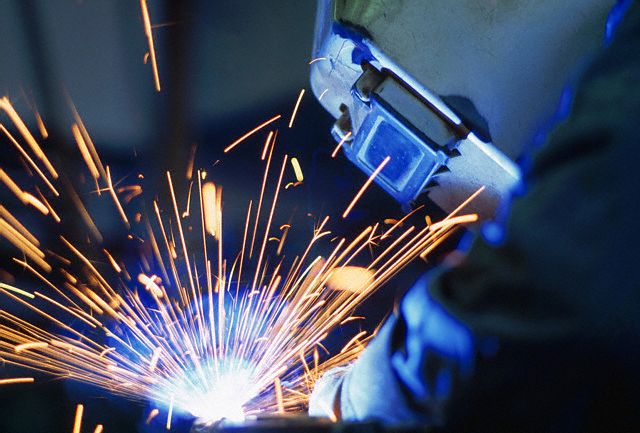
In a recent article from NBC news, a report came out that suggested that manufacturing jobs are returning to the United States, mostly in the form of work in auto-plants and other machinery manufacturing plants. However, the article also pointed out that even though the jobs are returning to the US, the quality of the job simply is not the same: the pay is lower and job security is also far less, with many temporary and contract workers. This poses a dilemma for both policy makers as well as auto manufacturing firms: while it is good to have jobs returned to the United States, is it okay to pay workers poorly and not offering other forms of benefits? Or should companies also have a responsibility to give “good” jobs to Americans?
I believe that the first order of business for a government is to ensure that jobs exist for the vast majority of its peoples, and while things like health benefits for workers and higher wages are important, this should come after jobs have been secured. Of course, that is not to say that in our quest for jobs, we can let businesses have a free rein over what they want to do; they must still adhere to legal regulations and other government regulations. As the cost of fuel have risen dramatically in the past decade (the current dip in prices of oil may only be temporary), and the cost of labor have risen elsewhere, it makes more sense for firms to manufacture in the United States, which remains one of the largest consumer market for products in the world. This is a historic opportunity that our government should not ignore, for a couple of reasons. First, millions of Americans are still out of work, and often manufacturing jobs can provide for those lacking skills in other fields. Secondly, and more importantly, a manufacturing base here in the US can help us wither more business crisis in the years to come. A more-manufacturing based economy can help in the following way: suppose an economy is in a recession and aggregate demand is down. A government stimulus can help the economy by ordering more goods even though there is no demand, and this in turn triggered greater output, greater employment, greater income, and kicks off a multiplier effect. A more service-oriented economy simply cannot do that, since government cannot purchase a service when there is no demand, and government spending can have a difficult time stimulate spending. So, in this sense, the return of manufacturing to the US, even at lower wages, can help us recover from a recession faster in the future.
Moreover, we must adjust our mindset toward large manufacturers like GM. Gone were the days when a factory worker can have enough wages to support a family of 4 and enjoy middle-class living standards. Manufacturing is no longer what is used to be because of the increased competition from overseas markets and greater automation in the workplace. But we must not let this fact deter us from taking advantage of opportunities that comes our way. After decades of “de-industrialization”, with industrial capacity being moved offshore, perhaps it is now time to “re-industrialize” and to leverage our country’s unique advantages to form a new, rebalanced economy.
 fqzhang