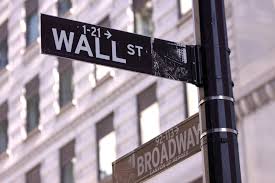
This has been bothering me a while, and I recently found an article online (http://www.businessweek.com/articles/2014-09-15/calpers-has-had-it-with-hedge-funds) that talks about similar ideas, so I think I will simply talk more about it today. I have always been thinking about how is it that hedge funds and other money management firms are earning millions while at the same time having performances that are below that of the market (as measured by the S&P 500). The article talks about how hedge funds currently have 2.8 trillion in assets under management, yet their performance is mediocre at best; and in any case, their rate of return is far lower than the market as whole in the past 2 years of raging bull market.
Of course, the arguments is and has always been that hedge funds aren’t designed to outperform the market. People in favor of the hedge fund industry argued that hedge funds utilizes a number of different market strategies that have different purposes and not every one of the hedge funds have the end goal of maximizing profit all of the time; and some cited that the hedge fund industry actually performed okay during the bleak years of ’08 and ’09, when mutual funds and other large funds that have a wide basket of stock or those that focuses on a particular index suffered enormous losses. In other words, the hedge fund’s returns has been less-negative than the market as a whole. There is a reason, after all, why they are called “hedged” since they try to stay more market-neutral. Some argues that perhaps that hedge funds delivers return in accordance with the risk-tolerance and desires of the investors, while the hedge fund itself simply find a niche market of consumers who have particular wishes. All of these are valid points, and some might argue that hedge funds might not be too bad, and perhaps they reduce some of the risks involved.
However, the key problem with these sorts of arguments in favor of hedge funds is that these funds have a very high fee-structure, which can seriously eat away investor’s return. Most of them have what has been called the 2-20 structure. Namely, charging 2% for their assets under management, and 20% for the profits that they are able to generate. While I do not have any numbers to back that up at the moment (this is a blog after all), we can easily see where the investors might not be making as much money as they might have hoped. Compare this to say a more diversified personal holding, or perhaps an index fund of some sort (having less commissions because they are not actively managed), and we can see why investors might be having second thoughts about giving money to hedge funds. Unless hedge funds can generate enormous amounts of returns to justify the fees they are charging, there is no reason for an investor focused on total return to invest with these funds, since the fee structure would simply reduce their returns.
For me personally, as someone interested in business and who might work in the financial services in the future, I worry about the viability of the industry as whole in the future. Would the hedge fund industry disappear altogether as more people switch to managing investments themselves or perhaps alternative forms of managing money that have a considerably lower fee structure? Or perhaps hedge funds would shrink down to a small size and making them something of a marginal business form?
It is interesting to note that hedge funds have not been around for too long. We credit it to Alfred W. Jones, who came up with the “hedged fund” back in 1949 with its invention. It is not until the 1960s that we see a boom in hedge funds, when people first heard about it. And it was not until the late ‘80s and ‘90s that we see hedge funds as something that takes a significant place in our financial landscape. Men like Paul Tudor Jones, who famously shorted the stocked market crash of 1987, profiting from the market’s spectacular decline, became something of a celebrity in our world. Perhaps, if the article in Businessweek is correct, are we seeing the hedge funds best years behind them? This is an interesting thought. However, I do not think hedge funds will be displaced in its entirety. The past couple of years have been absolutely extraordinary in the returns that the stock market has been generating. This is partly due to the Fed’s quantitative easing program, pumping billions and billions into the American economy while at the same time keeping interests near zero. The reasons and justifications for these measures have been many and subject to debate, but the result is that an enormous amount of money have been made available for investors (who behave increasingly like speculators) to invest in stock market. The low interests made leverage buying of a stock attractive, while at the same time, the safety of the bond market are not attractive since they the returns on their investments are so low. And in such times, the value of a stock have risen beyond all common and logical expectations, deviating from any fundamental reasons for a stock’s growth. This being the case, it will be difficult for any hedge funds to replicate the sort of fantastic returns that the market has been generating by itself. Over the long term, I do believe that hedge funds, with their unique strategies, will find a place in the investment community, although their size and influence might shrink in size, as people began to diversify further into other forms of investment that can generate even higher returns in a bull market.
Interested in investment ideas? click here.
 fqzhang