
For part 1, click here.
A second key contentious point is the role of private companies and national governments in space. The drive for space exploration was mostly led by governmental agencies since the very beginning, and currently a “virtual government space monopoly” exists. In the US, National Aeronautics and Space Administration was created in 1958 to coordinate the government’s efforts to explore space. The exploration itself is also closely linked to military endeavors, with intelligence gathering as one of the early reasons for the launching of satellites. Some argue that we should limit the role of governments and private interests in space and place exploration under the firm control of national governments, while others believed that we should open up space for commercial endeavors and to utilize space as much as possible.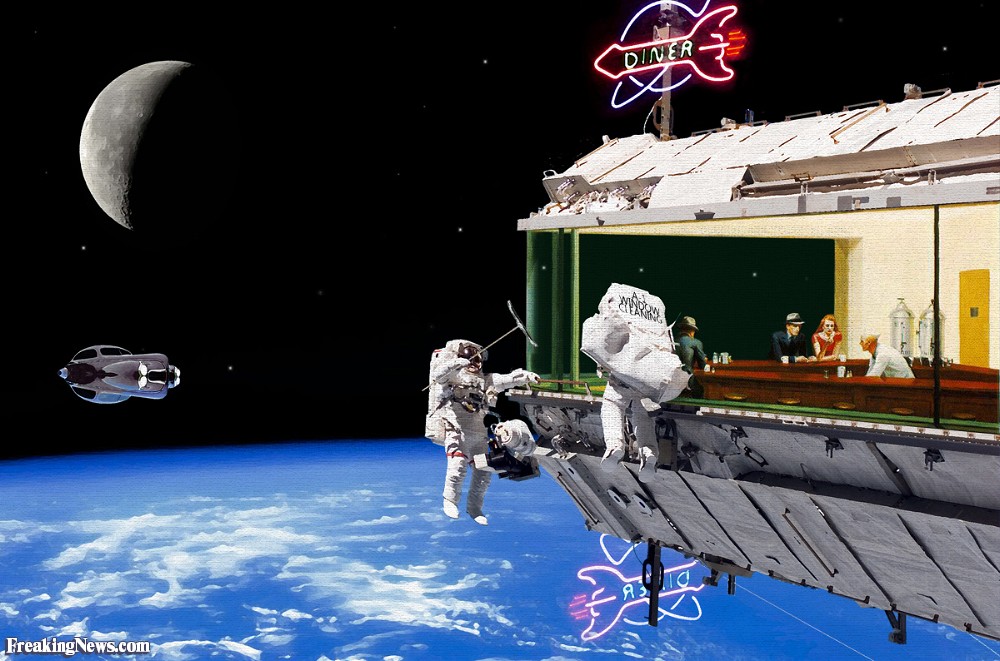
Anti-Space liberalization groups based their arguments on several points: first, private companies would only be willing to undertake space exploration if and only if immediate and short term economic prospects are possible, and therefore they have no long range exploration goals that can serve public interests. According to pro-space advocates, private interests cannot utilize space efficiently because space exploration requires a large amount of initial capital investments that few companies can or are wiling to afford, and the fact that any ventures in space would require years to generate any results doesn’t favor private investments either. Furthermore, there is an incentive for company to not do any original research at all and to instead rely on imitating others by doing what others have already began or done. This is not an issue when the government is the major source of research; however, with the privatization of Space R&D, company will sought to improve on their existing research than to build new ones, since the costs will be lower. According to the anti-privatization groups, only the government can sponsor basic research, without direct considerations for profitability.
Secondly, the exploration of space also brought up the points of who owns what in space, and how can governments regulate such claims of property or intellectual property. On land, the issues of property is quite simple, like in the American West in the 19th century, where the first ones to find the area and to use it to its full commercial potential can often obtain permission from the national government to gain ownership. However, no clear international agreements have been reached on using resources in space by each nation. The Outer Space Treaty of 1967 is an international agreement that guaranteed “outer space and celestial bodies are free for exploration” and under Article VI, signatory nations “bear international responsibility for national activities in outer space… whether such activities are carried on by governmental agencies or by non-governmental entities…” In effect, the treaty defines that space is open to all and activities in space are the responsibilities of the government. This works in the days when commercial development of space seemed so far away, however, now with humans on the moon and potentially on the asteroids or Mars, the resources on those planets can have great implications. For instance, asteroids are known to have rare-earth minerals which are commercially valuable even given the high cost of exploration. The question therefore is who should own these resources or if they should be exploited.
Anti-privatization people believed that giving up space and celestial bodies, such as the moon and asteroids, to private interests is irresponsible. Indeed, if we fully privatize space among the large companies, they can effectively dominate space and create a private monopoly and close it off to future exploration, or having power concentrated in the hands of too few people. In addition, unlike governmental research where any research generated can be shared with the public, private company’s research and the technology spillovers from R&D would not be shared with others, to the detriment of society.
On the other hand, many pro-privatization advocates argue handing over certain aspects of space exploration to the emerging Space Industry will be beneficial to society at large. Among their arguments include the cheaper ways that private companies can get humans/robots to space and to utilize space resources. For instance, recently, the SpaceX Falcon Heavy launcher can in theory deliver about 50 metric tons of payload to low earth orbit at a price of $120 million, averaging to about $1000 per pound, much less than the tens of thousands of dollars per pound that NASA’s technology can deliver. Currently, advocates of private interests in space argue, the government’s effective monopoly on space is encouraging waste, and if more company like Elon Musk’s SpaceX can be introduced to the competition, the costs of going to space will likely decline further as a result in refinement of space technology.
 Moreover, private property rights in space should be established because only private companies can use the resources to its greatest effect. Many pro-privatization advocates pointed to the difference between the usage of Arctic (which are fully utilized economically) and the Antarctic, which have no development; whereas the Arctic’s property rights are well-defined, the Antarctic’s is highly ambiguous. Similarly, if the resources in outer space is well-defined, many people here on earth can reap its economic benefits through the efforts of private organizations.
Finally, the third main point of contention in the space debate is the effect of space exploration on long term human health, both mentally and physically. Many people cite the facts that prolonged exposure to space is fundamentally unhealthy for human beings and long term stays are simply unfeasible. However, pro-space advocates argue that we must adjust to living in space through technological means and that in order for us to survive as a race, we must look to the solar system as a source of survival.
Ever since the first human flight to space, scientists have been carefully observing the effects of space environments on the human body. For example, scientists noticed that astronauts can develop a greater “risk of getting a kidney stone as a result of space travel since the body quickly dumps a lot of fluid when gravity is no longer drawing blood down into the legs and the elastic vessels squeeze it upward”. In addition, the body can lose large amounts of proteins, by up to 45 percent decrease in protein synthesis. In large part this is due to microgravity environment which results in a lack of muscular activity. Other long-term health effect includes bone loss, cellular organization and radiation.
Given these detrimental effects on human health, many argued that human travels to space should be limited in scope and argued that human settlement in space is impossible in the long run. Therefore, we as human beings should still focus our development on our only habitable planet as our bodies are physiologically adapted to life on Earth.
However, others believed that human beings should began to adopt to space. Some talk of an “astro-civilization” , where just like humans have moved from a nomadic to an agricultural then to an industrial society, our next logical step to expand to a space-based civilization. According to the pro-space advocates, the earth’s expanding millions required more and more resources to sustain itself. Therefore, it is necessary for us to develop technologies to enable us survive in space and to produce habitats similar to those on earth in near-earth orbit. Some have outlined strategies for monitoring human reactions in space step by step, such as Edgar Mitchell, who was an Apollo 14 Lunar module pilot. He argued that humans should first continue space exploration by landing on Mars and later establish a scientific laboratory on the Moon. This laboratory can be used to test how to adapt humans to the hostile environments in space. Once that is accomplished, we can then consider the establishment of more permanent bases with the eventual goal of settler colonies on Mars/Moon, or near earth space.
For part 1, click here.



 fqzhang