On China’s Anti-Corruption Drive

In China, ever since president Xi Jinping launched his promise to crack down on corruption both high and low (or to use his phrase, “striking tigers and flies at the same time “), a dark cloud seemed to have engulfed Chinese politics. The corruption drives seemed to have consumed absolutely everyone, and has been the talk both within China and abroad. Hardly a day seemed to go by without some “high ranking official” getting sacked for alleged embezzlement, misconduct, or plain neglect of official duties. Yet, despite all the fanfare, how much of an impact is the crackdown really making?

First, it needed to be said, this official drive against corruption has been popular with the Chinese people. Official corruption has long been a source of anger among most Chinese and they resent the way that government officials are able to use their given authorities to further their own ends. To many Chinese, the direct actions from the Central Government in Beijing are the only ways for which corruptions can be combated, since the national government are the only ones able to protect the defenseless people from the greedy and vicious local officials.

President Xi’s role as a corruption buster would hardly be the first in the long history of China, although it is arguably the largest such drives since the Communist victory in 1949. Throughout China’s imperial history, corruption has always been present in China’s vast bureaucracy. Therefore, it is the duty of the imperial court and the emperor to periodically send out officials from the capital to the provinces to inspect local officials and to hand out punishment to those officials found to be corrupt. One of the key reasons for the Communist victory of 1949 is the ability of the Communist leadership to present an image of themselves as the “incorruptibles”, and portraying their opponents, the Nationalists, as a group of corrupt bandits.

Now fast-forward to 2014, and we see that if we substitute the imperial bureaucracy with the Party bureaucracy; the imperial court with the Central Government in Beijing; the traveling officials of the court with the Central Commission for Discipline Inspection (a branch of the Central Government); and the emperor, dare I suggest, with the General Secretary of the Communist Party, Xi Jinping himself; and we then see a parallel system of combating corruption. Namely, by arresting those responsible and seize their ill-gotten assets. However, if we look at this method of combating corruption, we see that it is neglecting the true causes that enabled these corruptions to happen in the first place. Arresting officials may be easy to do in the short run and may discourage corrupt practices briefly. Eventually, the energy of a government get tired out and it would declare the corruption drives a success and wrap it up. This sort of solution could not be sustainable in the long run and is merely a stop-gap measure. Or to use our historic analogy, one key reason why every dynasty falls in China is its inability to handle reforms and had to rely on temporary measures to stop these failures in governance; eventually, only a popular uprising and revolution is able to change the status quo.

I’m sure this point is not lost upon the officials who instigated this sort of investigations in the first place. The question we must ask ourselves then is why this corruption drive if everyone knows it is destined to fail? I can divide up the reasons as follows: first, the desire to appear responsible and to gain popularity among the people, and gain credibility and praise for its leaders, most important of which is Xi Jinping himself; second, more importantly, to use this opportunity to eliminate domestic rivals and challenges to the ruling group’s rule through the process of arrest and public humiliation via a media campaign; and thirdly, as an explanation to the method of anti-corruption drives, to preserve the legitimacy of the party and to root out some of its abuses without actually loosening the ruling party’s hold on power.

The Chinese public, like publics everywhere, are eager for sensational news (how much funds he embezzled, how many apartments has he gotten, how many mistresses are being supported by him), and is willing to let the sensational take over the need for true substance, which is the need for institutionalized reform. For those in the highest levels of government right now, this ability to satisfy a public that is eager to combat corruption and see the downfall of corrupt officials makes the corruption drives worth the effort. Boosting its image among the public and gaining their support, the government is able to have a freer hand in dealing with other domestic issues such as the problems relating to environmental degradation; or in the international arena, such as the island disputes in the East and South China Seas. President Xi himself, by seeming to remain aloof from charges of corruption (while in reality his family assets are no less questionable), can gain the credibility needed to implement his political agendas.

In the opaque environment of Chinese politics, power is never as secure as it looks to the outsiders. There exists numerous factions with the Party itself, jousting for influence with one another. President Xi had gained power over the years by outmaneuvering his political opponents, most important of whom is Bo Xilai, a disgraced former Party regional leader who had been a key contender for national leadership and who was now found guilty of murder and numerous corruption charges. Now, as a part of his official anti-corruption campaign, Xi is moving against some of his other opponents such as Zhou Yongkang, an ex-security chief arrested for corruption and leaking state secrets. Indeed, the corruption drive, despite its wide scope, has targeted very specific individuals and groups that have opposed Xi in the past and are threatening his own power base. Arguably, partly as a result of the anti-corruption campaign, which rendered his opponents either in a state of confinement or politically powerless, Xi is now arguably the most powerful Chinese leader since the death of Mao Zedong, the founder of the People’s Republic.

Finally, the Chinese leadership, in spite of its political agendas, recognized the need to combat corruption on a serious level, as it presents a threat to its legitimacy in the eyes of the Chinese people. However, the most obvious solution, which is implementing reforms to the structure of governance, will invariably involve the loosening the Party’s grip on power. This is unacceptable to all party officials large and small, past and present. Moreover, the political institutions of China or the lack thereof presents serious challenges to be overcome: the lack of an independent judiciary not subject to political pressures, the intimate relationships between officials and heads of state-owned enterprises (SOEs), the pervasive cronyism as a result of the system of political appointees that run from the top down, etc. All of these are serious problems that needs to be addressed. The problem is, the Party is unable and unwilling to address these problems without themselves becoming discredited and falling from its position as the ruling party of China. Therefore, it had to resort to the sort of temporary stop-gap measures that have been the hallmark of central governments since antiquity. (And, likewise, destined to fail with the passage of time)

I recall reading a book a while back about China, which compared China to the bus in the movie “Speed” (1994), which features Keanu Reeves, Dennis Hopper, and Sandra Bullock. In the movie the cops must prevent a bomb from exploding in the city bus, while keeping the bus hurtling through the streets above 50 miles an hour. Any speed below 50 miles an hour and the bus will explode. Needless to say, China is this bus. Now let’s imagine for ourselves that we are the national leaders of China, and we recognized that there is a ticking bomb on this China bus. However, to keep China going, we must keep the Chinese economy growing at over 7% per year, keep the machineries of government working, and to maintain order onboard. All of these while we are navigating through the streets of international relations, and make sure that no one else is affected by our problems. Corruption is that ticking bomb that will likely explode and will be a problem for the national government if left untreated. However, to tackle it, the national leaders must take into considerations the numerous other factors at play. For now at least, it is simply easier to keep China going forward by developing its economy and distracts the people from the problems the nation is facing, than to tackle issue of corruption through institutional reform.

For more on the Chinese housing market, click here. For more on corruption in the oil industry worldwide, click here.

Questions of Identity: What defines our nation?

While having dinner at Berkeley’s dining commons, I was talking with an international student from South Korea. We were discussing our respective backgrounds. He was telling about how in South Korea, everyone identifies with one another, mostly in the form of culture and a similar language. He also mentioned an identifying factor that is hard to imagine in the US: race and ethnicity. In Korea, everyone belongs to the Korean “race” and this ethnic identifying factor is important in how Koreans see themselves as a nation. Then he asked me about something that he is confused about: What defines America? What is it that makes America stick together as a nation? Taken aback by this question, I couldn’t come up with a response. Then I stated that in the US, we do not value race, ethnicity, or even culture or language as much; rather, we as Americans share a certain set of values such individualism, respect for the law and democracy. However, as soon as I uttered those words, I realized how textbook like I sound, for these are the responses a course of American politics would probably gave. While he nodded in assent, I myself wasn’t entirely satisfied my response.

I have always enjoyed talking with international students, they often offers a fresh perspective on things that some of us born in the US or living in the US have taken for granted. Take the question of what defines the US for example, I have never thought about how bewildering the American Identity must have seemed to others. We are a nation that is multi-race, multi-religion, multi-cultural, and even multi-lingual (even though English is the de facto language of communication); indeed how is it that the American nation can stay together for so long?

After careful thought, I came to the conclusion our national identity is defined by several values. Most importantly, I believe that the US is defined by our inclusiveness to people of all different background, at the same time, we helped to foster immigrants and native-born citizens with a certain set of values that define America. And I believe the acquisition of an American identity happened in several stages. Firstly, those who immigrated to the United States are already breaking the bound with their old home country for political, religious, economic, and a variety of other regions that causes them to be no longer attached to their old identity. This is important because by forming a new blank slate (a table rasa if you will), a new identity can be imprinted upon them. Secondly, the gradually process of assimilation, or at least acceptance of American culture and the American way of life happens gradually. Through working, interacting with others, watching TV and accessing the internet, individuals can acquire a new perspective on things, a perspective that respects the diversity of American society. One key aspect of this acculturation to the US lies in the learning of the English language. This is not necessary merely for the cultural sense, but also to facilitate the understanding of what the larger society is about. Finally, the acquisition of an American identities is completed when citizens began to appreciate the political institutions of the United States, possess an understanding of the American political culture, and appreciate the nation for what it is. The acquisition of citizenship status is merely a formalization of the process of becoming an American. Throughout this process, a person began to identify more and more closely with the identity of an American.

However, this process of becoming an American is not without its challenges. At each stage of the process, a person may fail to progress to the next stage. For example, a person may remain so attached to their home country that they refuses to accept anything else even though they physically had come to America. Moreover, a person may refuse to learn the English language, or work, or interact with anyone else in the US. Or they may choose to fill their living rooms with foreign media and essentially recreating their home country in America, and isolate themselves from their surroundings. Under these circumstances, a person cannot become an “American” in the cultural sense of the word. And even when they chose to became a citizen, they did not truly complete the process of becoming an American in their heart and mind.

But what about remaining American after we began to identify with each other in a community? I believe that the decision of remaining American is an expression of our personal choice. We take pride in the community in which we belong in. Here, I draw upon the ideas of the famous French theorist, Ernest Renan, who argued that choosing to belong to a nation is a daily process of affirmation in a community. A nation is not a concrete concept that is defined by its borders, institutions, or other perceived similarities. Here in the United States, we are not defined by the 49th parallel North or the Rio Grande, but rather by a set of values and shared experiences that all of us treasure. The fact that we are living together and form a community is a testament to our continual will to be American; for if not, we can easily move away from this country, or “vote with our feet”. Each day, while we might not think of it as such, we are constantly reaffirming our desire to remain American by exercising our right to work, to express our opinions, and paying attention to the things going on around us.

However, this is not without its challenges as well. For the values that define us need to be constantly reinforced through more direct actions such as engagement with the political process by the simple act of voting. As Americans, we not only have rights but also responsibilities and if we neglected some of these simple acts, in a way, we forfeit our right to remain in the American community. If a nation is indeed a larger community of people that chose to remain together, then it is the duty for every member of that nation to constantly reaffirm their commitment to that community through their engagement with the nation and other members of the community. If the members of a nation cease to become engaged with one another, then the nation and the force that is binding it together will cease to function as a cohesive force.

This issue of what defines America affects me personally, for not too long ago, I became a citizen of the United States. As I was sworn in to become an American, I was overcame by a sense of apprehension. For what it is that I need to do, now that I am a member of the American “nation”. Should I behave in a different manner? Are my loyalties completely transferred over to this new nation? After the sworn-in ceremony, I did not feel any different than before, does this mean that I have failed in this transformative process?

Later, I recognized that the best way to feel at ease in this nation is to engage with its nation- and community-building process. By that I am suggesting that I will go out and vote and encourage others to engage in the political process as well, and volunteer my time and efforts and engage with the community around me. To appreciate on a daily basis what we do in this nation and to cherish the social, political, and cultural institutions that define the United States. But I above, I will continue to value and uphold the bonds that unites Americans together and to encourage others to do the same, making us stronger than ever before. A nation at its core is a community and it is the duty of each member of this community to develop a strong bond with one another, so that together we may progress into the future.

Labor market in Japan: Is female participation the key to economic recovery?

I came across this article quite recently on NPR news, “Is ‘Womenomics’ The Answer To Japan’s Economic Woes?” http://www.npr.org/blogs/parallels/2014/12/03/368143686/is-womenomics-the-answer-to-japans-economic-woes . The author posed the question of whether or not Japan’s recent policy, dubbed “Abenomics”, is going to pull the nation out of economic stagnation. One key component of this economic revitalization is to introduce women into the workplace and to provide a more talented pool of workers for the economy to draw upon. However, his policies have been controversial as well, since he is accused of helping only a small group of women, and not doing enough to help advance the careers of others. The debate, therefore, revolves around what is the economic role for women in a society such as that of Japan’s?

It is no secret that the Japanese economy is in a sluggish condition, with many structural problems present. Personally, I believe in the importance of sustained economic growth to bring benefits to society, and if having greater participation can contribute to the economic development, then I believe it is the duty of a government to help women assimilate into the workforce. This will no doubt face considerable resistance from many in a traditional society such as that of Japan, where women in the workplace, especially in jobs like manufacturing, is still something rarity, and women are expected to become the child-bearers and homemakers in society. But we must not forget the fact that the Japanese workforce is shrinking due to population decline, and immigrations are still being severely restricted in the nation. Therefore, it is imperative for Japan to increase the size of its labor force by including more women than before in order to save many of the industries in the country from being relocated elsewhere.

This sort of change requires a fundamental shift in the way a society views how their economy should be organized. If we look back at the history of Japan, we see that Japanese society reorganized itself from a feudal agricultural nation into an industrial one in the late 19th century; and post-World War Two, when Japan orientated itself to become an exporting nation, with an emphasis on electronics. These sort of changes did not happen overnight and had to overcome challenges within society, the landowners and domestic industrialists respectively. Also in each case, the government, in the form of a centralized bureaucracy and the Ministry of Economy, Trade, and Industry (METI), helped to propel the nation into greater economic advancements.

In today’s Japan, societal views of women have not changed in decades, even though the economic fortune of Japan have shifted considerably. In response to this new crisis in the labor market, I believe that the government has the opportunity to once again take a proactive role in society, and to encourage economic development by making drastic changes in the social framework. By providing subsidies to industries that hire women, by giving better childcare and social benefits, by opening technical training programs for women, the Japanese government can introduce more women into the workforce. Japan has done it before, spear-heading changes in its economy and transformed itself into the 3rd largest economy in the world today. I believe that with the right amount of political will to foster these social changes, Japan can once again become an engine of global economic growth.

The return of manufacturing jobs to the US: challenges and responsibilities

In a recent article from NBC news, a report came out that suggested that manufacturing jobs are returning to the United States, mostly in the form of work in auto-plants and other machinery manufacturing plants. However, the article also pointed out that even though the jobs are returning to the US, the quality of the job simply is not the same: the pay is lower and job security is also far less, with many temporary and contract workers. This poses a dilemma for both policy makers as well as auto manufacturing firms: while it is good to have jobs returned to the United States, is it okay to pay workers poorly and not offering other forms of benefits? Or should companies also have a responsibility to give “good” jobs to Americans?

I believe that the first order of business for a government is to ensure that jobs exist for the vast majority of its peoples, and while things like health benefits for workers and higher wages are important, this should come after jobs have been secured. Of course, that is not to say that in our quest for jobs, we can let businesses have a free rein over what they want to do; they must still adhere to legal regulations and other government regulations. As the cost of fuel have risen dramatically in the past decade (the current dip in prices of oil may only be temporary), and the cost of labor have risen elsewhere, it makes more sense for firms to manufacture in the United States, which remains one of the largest consumer market for products in the world. This is a historic opportunity that our government should not ignore, for a couple of reasons. First, millions of Americans are still out of work, and often manufacturing jobs can provide for those lacking skills in other fields. Secondly, and more importantly, a manufacturing base here in the US can help us wither more business crisis in the years to come. A more-manufacturing based economy can help in the following way: suppose an economy is in a recession and aggregate demand is down. A government stimulus can help the economy by ordering more goods even though there is no demand, and this in turn triggered greater output, greater employment, greater income, and kicks off a multiplier effect. A more service-oriented economy simply cannot do that, since government cannot purchase a service when there is no demand, and government spending can have a difficult time stimulate spending. So, in this sense, the return of manufacturing to the US, even at lower wages, can help us recover from a recession faster in the future.

Moreover, we must adjust our mindset toward large manufacturers like GM. Gone were the days when a factory worker can have enough wages to support a family of 4 and enjoy middle-class living standards. Manufacturing is no longer what is used to be because of the increased competition from overseas markets and greater automation in the workplace. But we must not let this fact deter us from taking advantage of opportunities that comes our way. After decades of “de-industrialization”, with industrial capacity being moved offshore, perhaps it is now time to “re-industrialize” and to leverage our country’s unique advantages to form a new, rebalanced economy.

Reflections on India’s hydroelectric project

According to a recent article on Reuters, “India approves projects in dash for growth, alarming green groups”, author Tommy Wilkes discussed the Indian government’s approval to build the country’s largest hydroelectric power plant. The construction of this dam will upset the ecological environment of the area considerably by cutting down trees and reducing biodiversity. Therefore, the debate in this case is whether or not the government should allow a plant to be built in the state to promote the economic growth of the area and the nation, or should they look to protect the environment and to help promote the long-term environmental welfare of the region?

While it is easy to simply blame the shortsightedness of greedy industrialists or government officials only interested in tax revenues, we must bear in mind that India is a large developing nation with its own needs. For us here in the United States, which enjoys a high standard of living and free from most material needs, it can be inappropriate to pass judgment upon others that are less fortunate and are behind the American standard of living. Imagine telling the American or British industrial worker of the late 19th century to leave their jobs behind and their families starving because of concerns for the environment! We can think of society as being in a long series of progress, just the US and Western World had undergone significant environmental degradation in the past, and moved beyond that stage to the present, I believe that the rest of the industrializing world will undergo a similar process, eventually becoming more green-conscious once they had developed to a certain level. For the government of a developing nation that is responsible to the people, protecting the environment should not be on the top of the list at the present.

I know some may find this view extreme, and may offer several counterarguments. For example, they may reason, when the West was industrializing, we do not understand the impacts of pollution on the environment – but now we do, and therefore we need to tell the nations of the developing world to place the environment at the top of their priority. However, recall that Abraham Maslow, the famed psychologist, once came up with the “Hierarchy of Needs” for human beings and I would extend this logic to society as well. When a society still has its “needs” unmet – clean water, reliable source of enegy, etc – they cannot be worrying about things in the “self-actualization stage”, such as environmental justice and minimal carbon footprint.

To use the terms of ethics, we can see that what India is doing by building the dam is to maximize the most amount of benefits for the most amount of people, an utilitarian approach. This approach (first expressed by John Stuart Mill and Jeremy Bentham in the 18th century), despite its many drawbacks, do have the important advantage getting the most amount of benefits for a given limited amount of resources, something that is crucial for developing nations. However, this is not to suggest that we can simply let them off the hook for all environmental degradations, for in the interconnected world today, pollution from developing nations affect the world as much as developed ones. But we cannot judge countries in the same standards because each one has its own historical needs and priorities. As India and the rest of the world close the gap between themselves and the West, we can expect more from these countries and how they can start to make a positive impact toward the environment in the framework of their overall development.

The changing social climate of UC Berkeley: activists or those who need to be activated?

Recently, in Berkeley, we celebrated the 50th anniversary of the Free Speech Movement that took place during the 1960s, with campus-wide events hosted by a variety of clubs and organizations. It happens that while walking with a friend out on Sproul Plaza (the center of UC Berkeley’s political and social life, where much picketing and demonstration happens), I asked her if she is doing anything in relation to this event. I wasn’t expecting an affirmative response, for most people don’t really care too much; but to my astonishment, she does not even know what Free Speech Movement was! After talking with her further, I realized that she does not know anything about the history of the University, and especially the activism of the early 60s and the Vietnam era, or even Berkeley’s reputation as one of the most liberal colleges in the US. However, soon I remembered that she is an international student who did not care to do the research on the social aspects of this university and instead applied simply for the university’s reputation as a center of research.

Later, after I came back into my room, I began to ponder about how Berkeley has changed since the 60s. The students are simply no longer the same. Traditionally, those students who are most actively have come from the American middle or lower-middle class, those who have received an excellent education, but also who has an extensive amount of interactions with the socially disadvantaged. The hippies and the liberal atheistic type that abounded during that time no longer exists. (Well, not if you count the large homeless population in the city of Berkeley, many of whom holds liberal views. The student population as a whole do not regard them as a source of enlightenment, but rather as a nuisance with ideas of a bygone era.)

The changing demographic of Berkeley has changed what it means for Berkeley as a left-leaning or liberal university. Increasingly, the student composition of UC Berkeley have come from outside the state and outside the country. Based on the 2014 admission statistics, we see that around 25% are out-of-state students and 10% are international. The differing academic acceptance rates are partially political in nature: since traditionally the UC system depends upon state funding to continue its operations, and therefore accepting an overwhelming amount of in-state students; but now with the continual low amount of state funding, the school depends on out of state tuition fees to cover some of its expenses.  These changes have profoundly changed the view Berkeley students viewed themselves and the world. The background of these students are often upper middle class or even from the very top echelons of their respective countries. This resulted in them being less interested in social issues and more interested in their education or their enjoyment of college, in more extreme cases, they are treating the college experience almost as a 4-year vacation. As a Berkeley student, I note with interest the difference between those who are born in the state of California and those who are from other parts of the US or around the world, who in general are wealthier: students from affluent overseas families would often prominently display their Coach bags or Prada shoes, while those of us of middle or lower class background in California walks around in our simple clothing, with nothing flashy to show.

This changing demographics are partly to blame for an increasing amount of apathy in political and social affairs. Here in UC Berkeley, many of students (from a different location or background) do not know of anything important that’s going on around them, and display no interests whatsoever in local or community issues. On national issues, their awareness is just as low. This results in an interesting situation on campus, where the professors are often far more liberal – being from a different era – and more caring about issues around them than the students themselves, despite the great age differences.

This is a disturbing trend for many reasons. Firstly, college is not simply a place where we learn in a classroom, despite the importance of it. Most of us learn through interactions with others and caring about the community is the first step in learning what it means to be a member of it. Caring about issues at hand – whether it is immigration reform or the Keystone pipeline – should still interest us. And interests frequently lead to social change. Moreover, Berkeley is a place where we prepare future leaders who have ideas on how they want to change the world. How can we accomplish this without have an activist student body? Student activism is not limited to picketing and sit-ins, but also in talking with those in a position of authority, writing about issues they care about, make their voices heard on social media and so much more. Every student should have an activist part within them, and college is the best time to discover themselves and act on their activism.

What should we do to change this? By no means do I suggest that Berkeley stop accepting students from other locations or those above a certain level of income; the diversity is what made us who we are, and we should keep it that way. But I do think that we should encourage activism among the students by offering more selections of classes or programs whereby we can learn about contemporary issues and provide forums in which students can explore more. Perhaps, even in the college admission processes, we can weigh more portions on the activism aspects and look for students who demonstrated potential for activist changes. This way, we can ensure that our University continues to be not only the top school for education, but also continue as a place of student activism.

On the future of Hedge Funds

This has been bothering me a while, and I recently found an article online (http://www.businessweek.com/articles/2014-09-15/calpers-has-had-it-with-hedge-funds) that talks about similar ideas, so I think I will simply talk more about it today. I have always been thinking about how is it that hedge funds and other money management firms are earning millions while at the same time having performances that are below that of the market (as measured by the S&P 500). The article talks about how hedge funds currently have 2.8 trillion in assets under management, yet their performance is mediocre at best; and in any case, their rate of return is far lower than the market as whole in the past 2 years of raging bull market.

Of course, the arguments is and has always been that hedge funds aren’t designed to outperform the market. People in favor of the hedge fund industry argued that hedge funds utilizes a number of different market strategies that have different purposes and not every one of the hedge funds have the end goal of maximizing profit all of the time; and some cited that the hedge fund industry actually performed okay during the bleak years of ’08 and ’09, when mutual funds and other large funds that have a wide basket of stock or those that focuses on a particular index suffered enormous losses. In other words, the hedge fund’s returns has been less-negative than the market as a whole. There is a reason, after all, why they are called “hedged” since they try to stay more market-neutral. Some argues that perhaps that hedge funds delivers return in accordance with the risk-tolerance and desires of the investors, while the hedge fund itself simply find a niche market of consumers who have particular wishes. All of these are valid points, and some might argue that hedge funds might not be too bad, and perhaps they reduce some of the risks involved.

However, the key problem with these sorts of arguments in favor of hedge funds is that these funds have a very high fee-structure, which can seriously eat away investor’s return. Most of them have what has been called the 2-20 structure. Namely, charging 2% for their assets under management, and 20% for the profits that they are able to generate. While I do not have any numbers to back that up at the moment (this is a blog after all), we can easily see where the investors might not be making as much money as they might have hoped. Compare this to say a more diversified personal holding, or perhaps an index fund of some sort (having less commissions because they are not actively managed), and we can see why investors might be having second thoughts about giving money to hedge funds. Unless hedge funds can generate enormous amounts of returns to justify the fees they are charging, there is no reason for an investor focused on total return to invest with these funds, since the fee structure would simply reduce their returns.

For me personally, as someone interested in business and who might work in the financial services in the future, I worry about the viability of the industry as whole in the future. Would the hedge fund industry disappear altogether as more people switch to managing investments themselves or perhaps alternative forms of managing money that have a considerably lower fee structure? Or perhaps hedge funds would shrink down to a small size and making them something of a marginal business form?

It is interesting to note that hedge funds have not been around for too long. We credit it to Alfred W. Jones, who came up with the “hedged fund” back in 1949 with its invention. It is not until the 1960s that we see a boom in hedge funds, when people first heard about it. And it was not until the late ‘80s and ‘90s that we see hedge funds as something that takes a significant place in our financial landscape. Men like Paul Tudor Jones, who famously shorted the stocked market crash of 1987, profiting from the market’s spectacular decline, became something of a celebrity in our world. Perhaps, if the article in Businessweek is correct, are we seeing the hedge funds best years behind them? This is an interesting thought. However, I do not think hedge funds will be displaced in its entirety. The past couple of years have been absolutely extraordinary in the returns that the stock market has been generating. This is partly due to the Fed’s quantitative easing program, pumping billions and billions into the American economy while at the same time keeping interests near zero. The reasons and justifications for these measures have been many and subject to debate, but the result is that an enormous amount of money have been made available for investors (who behave increasingly like speculators) to invest in stock market. The low interests made leverage buying of a stock attractive, while at the same time, the safety of the bond market are not attractive since they the returns on their investments are so low. And in such times, the value of a stock have risen beyond all common and logical expectations, deviating from any fundamental reasons for a stock’s growth. This being the case, it will be difficult for any hedge funds to replicate the sort of fantastic returns that the market has been generating by itself. Over the long term, I do believe that hedge funds, with their unique strategies, will find a place in the investment community, although their size and influence might shrink in size, as people began to diversify further into other forms of investment that can generate even higher returns in a bull market.

Interested in investment ideas? click here.

Housing market and its implications for the Chinese economy

Currently (as of late October, 2014) the Chinese housing market is at a historic high, yet housing prices have increased only modestly this year. This got me to thinking, could the booming Chinese housing market be at a turning point, and is perhaps already on a road to decline? Recently, I have read that some in China have begun to starting selling their houses, and that those who sells it the most are those with government connections. Perhaps they have some insider information on the Chinese government’s attempts to curb this housing bubble, or that they know something the rest of people in China do not? In terms of policy, I believe the best way to do this is through tightening the credit market, and raising interests rates. Its been well known that the government have been trying to do curb the proliferation of non-performing loans and easy money that is circulating in the country, and if the central bank indeed decided to raise the interest rates, the effects could be extremely profound, not only for the housing market, but for the entire economy. The construction boom occurring in China is fueled by the essentially free-loans that real estate developers have been getting through state-owned banks, many of these using their political connections. And now the housing supply have far outstripped the demand for housing, yet the price remains artificially high, with most of the new buying coming from speculators. In this situation, a crash is inevitable. Many have warned that crash is impending for many years now, yet the market took the warning in stride, perhaps factoring in the risk. Yet investors still believed that the boom is sustainable. In such a situation, even the slightest sell-offs can induce a panic.

Let’s look at a hypothetical situation. Going back to the central government’s actions. If the central bank (People’s Bank of China) had raised interest rates, the money fueling the construction would dry up, speculators would not be able to gain the necessary funding for them to construct new homes and further speculations in the market can no longer be financed. In this case, the housing will tumble investors leave the market en masse. The non-existent demand would not be able to prop up the price or to slow the decline. A fall in housing price will likely mark the beginning of a general slowdown in the Chinese economy for several reasons: firstly, the housing sector and construction is one of the largest sector in Chinese economy and much of the economy is tied to real estate in one way or another. The housing sector stimulated demands for steel, concrete, etc, and provided employment for millions of migrant workers coming into China’s cities each year. A fall in construction would result in overall lower aggregate demand in the economy since it is such a major component. Secondly, many companies uses real estate as asset to back their loans, and with a rise in interest rate as well as a fall in the housing prices, more loans would be much harder to get and the companies will get less of it because of the decline in their property values. As cheap loans have been at the basis of Chinese economic growth for years now, it is reasonable to expect that as this cheap loans dry up, the Chinese economy (which is driven by new investments) would slow as well. Non-performing loans, especially at the provincial and municipal levels in China would inevitably further exacerbate the crisis. Many state-owned-enterprises are burdened by high amounts of loans and a rise interest rates would cause them to become financially insoluble, a risk the Chinese government simply cannot take.

Of course, these risks have passed through the mind of the government officials as well, and especially since many government officials have ties to the commercial world, they would not be likely to push for legislations that would damage their commercial holdings. (On corruptions in China, click here). No one wants the housing market to decline, since everyone has so much tied into it. A decline in housing is not likely, or at least the government will sought to delay it as long as possible. However, the need to curb the wild growth in the market is needed. Once again, as many commentators have stated before, the Chinese economy needs structural reforms in order for it to sustain the levels of growth. The deep and complicated ties between political bodies, regulatory agencies, banks, developers, speculators, etc. causes the rise in property values in the first place, and now it has grown to an unsustainable level. The task before the government is therefore to curb the wild proliferation of loans without damaging the rate of economic growth and find a solution that is acceptable to all parties involved. A herculean task indeed! It remains to be seen how the government will be able to manage this crisis.

Oil companies and the ethics of overseas investment

Corruption is an issue I care about deeply, and this will be one of a series of writings on it. This particular post is focuses on politico-economic corruptions with oil companies, and is written in a documented research format. (For other articles on corruption in China, see here)

Oil companies are constantly seeking new ways to acquire new resources and to expand overseas. Oil companies are no exceptions. In their case, the quest for greater access – in the form of drilling rights to oil and gas fields across the world – to resources has been intense and lead them to deal with governments around the world. However, this also presents an ethical dilemma: many of oil fields are under the ownership of governments that are often perceived as corrupt by international standards (as measured by the Corruption Perception Index[1]), so should big oil and gas companies deal with these inherently inefficient governments? On one side, oil companies have a duty to its shareholders to maximize value and a need to maintain its global competitiveness through investments; on the flip side, businesses should not provide funding to fuel corruption and social inequality, give aid indirectly to groups that threaten American national security, or to further human rights abuses as a result of economic exploitation. To narrow down the scope of this discussion, I would like to focus on the role of the six “Supermajors” in the oil industry: BP, Chevron, ExxonMobil, Royal Dutch Shell, Total SA, and ConocoPhillips, and their interactions with two countries in particular: Nigeria (ranked 144 out 175 based corruption levels, with 175 being the worst) and South Sudan (173 out of 175).

Let’s examine the societal impact that private oil companies have on the people in the countries they operate by presenting some facts. Oil industry is a multi-trillion dollar industry, and they operate in all regions of the earth.[1] In the example of Nigeria, Shell, ExxonMobil, Chevron, and Total all have stakes in Nigeria, with both on and off-shore oil production facilities, concentrated in the Niger River Delta. The companies are partnered with the Nigerian National Petroleum Corporation (NNPC), a state-owned enterprise. Nigeria, as a member of OPEC, maintains at least 51% ownership in all its joint ventures with foreign companies.[2] Foreign expertise in the oil industry is crucial for the development of Nigeria’s offshore drilling platforms, and much of Nigeria’s future earnings from oil likely will come from these areas in the Gulf of Guinea. Currently, oil and gas exports accounts for around 95% of Nigeria’s exports and 76.39% of federal government revenue, pumping hundreds of billions of dollars into the economy.[3]

These numbers all seemed great; and if indeed this is all the things that oil companies had done – creating jobs and helping provide a source of government revenue – then we have nothing to blame the Big Oil for. However, the presence of foreign companies on Nigerian soil is far detrimental than it appears at first sight. As oil increased in importance (from 3.43% of GDP in 1965 to 37.44% in 2009[4]), it fuels increasing corruption by giving an extraordinary amount of power to the government officials in charge of handing out government contracts. Kickbacks and briberies are commonplace and oil companies are unscrupulous in giving out sums of money to officials, in exchange for favorable deals. Government officials are intimately connected to the military and other social elites, giving the oil companies a leverage in influencing the politics of the nation as well. Nigeria underwent a serious of military coups since independence in 1960, and much of it occurred with the knowledge or the tacit approval of foreign oil companies, ensuring that their own interests are protected above all. This fueled an enormous amount of corruption at the very top of society. As an example, former dictator Sani Abacha, who ruled the country from 1993 to 1999, is estimated to have stolen the equivalents of 2-3 % of the nation’s GDP for each year he was president.[5]
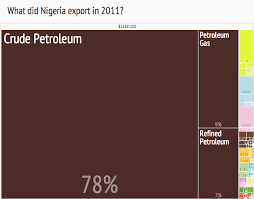
As we can see, the presence of oil companies introduced an element of instability to the post-colonial landscape by giving rise to a plutocracy that are self-promoting and cares nothing for the nation. Moreover, oil companies, by interacting with these corrupt countries, are also destabilizing them. It causes social unrest between different groups in the county: oil vs non-oil producing regions, the business interests vs subsistence farmers. The Supermajors are extremely influential in world affairs by virtue of their size and the different areas that they operate. With this great power also comes a great responsibility: to promote the interests of the people living in the areas that they are operating. Energy companies are already under intense criticism for not being responsible, and it is time for oil companies to become more responsible stakeholders in society. From this perspective, oil companies should limit their interactions with corrupt governments such as that of Nigeria’s and restrict their investments to countries that score high on their political transparency. Companies should take into consideration processes of government approval of projects, have a basic idea of where the revenue is going, and refrain from bribery (this last point is somewhat unnecessary since bribery is already illegal under the Foreign Corrupt Practices Act in the US and elsewhere, but stricter enforcements are necessary.) Only through this careful evaluation of government transparency can the “oil majors” ensure that their investments are not only benefiting themselves but also others in the community that they are involved in.

Besides giving rise to further corruption in society, by interacting with corrupt or underdeveloped countries – they are often the same since one often leads to the other – oil companies also indirectly retards the growth of a domestic economy. Nigeria, for example, went from exporting large amounts of agricultural products such as coffee and grain, to becoming a net importer of food, even while millions of acres of its own land lay fallow due to a lack of investment in agriculture.[6] The presence of oil and natural resources shifted the focus of the company away from developing its industrial and agricultural base to becoming dependent on a commodity that fluctuates daily in the international market, a classic example of the resource curse. This causes a lack of diversification for the economy and contributes to volatile economic growth for the region.[7]

Once again, we must consider the role of the oil company as more than simply a profit-generating entity that can neglect its surroundings. Companies exist in their environment, and I believe that people tolerate the existence of corporations because of the possible benefits it brings to society. The vast majority of the people of Nigeria, a nation of over 170 million people, are not deriving any benefits from the black gold beneath their feet and off their shores. They had come to resent the oil companies for being the source of their misery and the ongoing crisis in the Niger delta (political and economic). This resentment is often expressed in the forms of oil stealing, negligence while working, and forms of demonstration. This causes disruptions in oil supplies and greater costs for oil companies to run their operations. Furthermore, tying into the overall theme of corruption, we see a relationship of how economic underdevelopment contributes to corruption: poorer people tends to favor extreme solutions to their problems, causing them to seek “strongman” to rule the country in the hope of solving their problem (or as President Truman once said, “The seeds of totalitarian regimes are nurtured by misery and want”[8]); this in turn causes concentration of power and wealth in the select few, who evolves into self-serving oligarchy; the oligarchy is afraid of losing that power and uses oppression to cement their rule, causing suffering to millions, and eventually a new leader will arise who will promise change, but who in fact only looks out for his own interests; and the cycle begins anew. Throughout this entire cycle, oil and oil companies are the lubricants that makes the machinery of corruption run. Oil companies in a country like Nigeria fosters corruption, increases reasons for oppression, and while at the same time harms the structure of an economy. It is advisable for oil companies to stay out of the market altogether, or at least not to return until conditions have changed and civil society had become stronger.

A final point arguing against the involvement of Big Oil overseas would be the existence of terrorists groups and parties hostile to the US that might benefit from the petrodollar flowing into their economy. In Nigeria, the Islamic terrorist group Boko Haram (whose name meant “Western education forbidden”) is busy stealing oil through breaking pipelines, taking control of oil fields and illegally refine oil [9]. Boko Haram, with links to the international terrorist group Al-Qaeda, presents a security threat to both the people of Nigeria and nations around the world. The group appeals to those Nigerians who felt cheated out of the benefit brought about by the exploding oil wealth in the country. The money gained from the oil refinery has given the group the means to recruit new members and increased its militancy, as demonstrated by the recent kidnapping of over 200 schoolgirls in northern parts of the country.[10] Oil companies can stop all of these by not conducting business in the country where terrorists groups operate, as listed by the US State Department. By not conducting businesses in those countries, we are decreasing the power of terrorist groups to obtain funding and eliminate some of the social inequalities that gives rise to terrorism in the first place.

Now that we have discussed several of the key points against oil companies operating overseas, let’s look at the pro-Big Oil side’s counterarguments.

The six Supermajors, whether they are the French company Total or Exxon of the US, exists in the structure of a corporation. A corporation is a separate entity distinct from its owners, but at the same time having many of the same rights as people, as the Supreme Court decision “Citizens United v. FEC” reaffirmed and expanded in 2010. Rights are necessary because companies need to be able to enter and enforce contacts with different parties with limited outside interference. These rights, as applied to businesses, essentially meant that they should be free to select who they would like to do business with without their home government come in and meddling with their decisions. From this point of view, even though governments that own the oil fields may be corrupt, this should not prevent companies from trying to enter their markets in its search for natural resources. Political goals and even human rights and global development should not be the main concerns of these businesses, and governments should not limit business operations based on these non-business goals. Corporations have a fiduciary duty to their shareholders and oil companies believe that as free entities, they should be able to pursue their interests in foreign countries. As many of the oil companies are struggling to remain competitive amid high costs, they are looking to get access to as much raw materials as possible at the lowest possible price. Furthermore, in regards to their social responsibilities, Big Oil lobbyists argue that by producing oil in foreign countries, they will eventually help the citizens of those countries by providing them with revenues for them to develop, while at the same time people in the developed world benefits by having access to cheaper fuel prices.

Another key point oil lobbyists make is that the Big Six are facing new challenges from a number of sources. Most significantly, many national oil companies (NOCs) have emerged as important players around the world. These enterprises are often state-owned, working on oil fields at home while at the same time expanding in underdeveloped areas in Africa and elsewhere. The largest among these include Rosneft and Gazprom in Russia, Petronas of Malaysia, China National Petroleum Corporation and other Middle Eastern and Indian oil concerns. In the past, the Supermajors are able to fend off these challenges because they possess the skills and technologies to outdo these competitors. But today, developing nations are catching up to the skills needed to be successful. In order to respond to these challengers, the pro-oil side argues that the oil companies must expand more overseas to markets that have been previously overlooked. However, often this is impossible because the US government has placed sanctions on certain countries, due to a variety of political reasons.

One example is South Sudan, where prior to its independence from the Republic of Sudan, US companies are not allowed to do business with due to the prevalence of state-sponsored terrorism. In 2011, Southern Sudan became an independent nation and US companies are eager to get in on this new market. However, they are still prevented from doing so; this is because South Sudan lack the proper infrastructure for transporting oil and requires pipelines through the Sudan, which is on the sanctions list by the State Department. South Sudan has also been considered to be a major violator of human rights due to the ongoing civil wars in the country. Despite these concerns, oil lobbyists pointed out that other Asian companies are not bound by these restrictions and are gobbling up oil fields in large tracts, and providing 98% of government revenue for South Sudan in the meantime.[11]

Why should Asian NOCs be allowed to invest in a corrupt government while Western companies are not? Oil lobbyists argue that this is unfair for American/European companies since they are being placed at a disadvantage by for political reasons. They argued that by staying out, we are not helping solve the human rights issue since other companies will simply step into the void, while at the same time, Western companies are missing out on a valuable opportunity to grow.

All of the arguments made in favor of oil investments in corrupt governments overseas all have good merits and deserve our considerations. However, each one also have its faults, and I will address each one individually.

Firstly, oil companies pointed out the divide between politics and business and urged governments not to interfere in the economic sphere. This division simply do not exist in real life; if anything, the natural resource extraction business depends on the protection and promotion of governments more than any other industry. Since the 19th century, oil and gas companies have often been the instigators of legislations and works closely with governments: the help the British governments provided to Anglo-Persian Oil Company (later BP) when faced with a possible nationalization in Iran[12], the substantial tax cuts of the Bush Administration on the oil industry are all some of the examples of businesses working with governments to secure their interests[13]. The hypocrisy is evident: even though the oil and gas industry actively lobbies the governments to help them, at the same time they continue to resist any form of government regulation. In this sense, we see that the oil company’s freedoms are not really affected, but rather, Big Oil have entered a sort of contract with national governments whereby oil company will get their interest promoted in exchange for some regulations, such as not doing business in countries with poor human rights records. This arrangement, in my view is fair, and Big Oil are not getting their rights violated, as they have often claimed.

Secondly, oil companies argues that if the West did not invest in African oil, then other Asian countries will simply step in. However, we need to remember that many of these Asian countries, such as China and Malaysia, also have human rights violations of their own, from cracking down on journalists to prohibiting the freedom of assembly. Can the United States and other western nations, areas with decades if not centuries of respect for human dignity, be held to the same standard as these countries? Oil and gas companies are our nation’s representative overseas, and what they do or don’t do reflect back on their country of origin, either enhancing or endangering the moral power of the United States and the West as a symbol of freedom in international relations. From another view, as countries in the developing world democratize and cast off their legacy of oppression, would the governments and people of those countries want to deal with companies that had fostered their oppression in the first place? Probably not. The developing nations also represents the biggest emerging market (Nigeria’s population are expected to more than double to 440 million by 2050[14], even exceeding that of the United States at the time), an area that oil companies simply cannot ignore. Oil companies need to consider this in the future, and good relations with these nations is crucial for Big Oil’s long term vision and success.

Finally, Big Oil companies argued that they need to bring benefits to all stakeholders. However, I would like to argue that not all stakeholders are of equal importance. It might be true that shareholders in the company can get some extra dividends through an investment, and certain government officials can become rich. But what about the millions in Nigeria or South Sudan that are living on less than $1 a day, and who are trapped in a cycle of poverty? Indeed, oil companies are neglecting the single most important stakeholder in oil development projects, which is the people who are living in the area affected the activities of oil companies. Imagine this: if a company comes by and decide to occupy large amounts of land without due compensation, pollutes the land and rivers with refinery wastes, and do not bring any job opportunities to the displaced peasants, would you support the company moving in? I would imagine not, and yet this is precisely what is happening in the Niger River Delta.[15] Can a company be said to be a responsible member of society if it brings nothing but misery to the area where it is present, no matter how much wealthier they are making executives back at home? In this situation, it is only ethical for companies to limit its investment or not invest at all.

To sum up, I believe that it is inherently unethical for Western oil companies to invest in overseas asset in corrupt/underdeveloped countries. As my examples have shown, the presence of oil companies in these regions will likely lead to economic underdevelopment, further human rights abuses and exacerbate political corruptions. In order for oil companies to be considered responsible corporate citizens, it is imperative for them to refrain from doing businesses in these regions.

[1] http://www.aei.org/publication/energy-fact-of-the-week-as-a-separate-country-the-us-oil-and-gas-industry-would-be-the-16th-largest-economy-in-the-world/

[2] http://www.nnpcgroup.com/NNPCBusiness/BusinessInformation/OilGasinNigeria/IndustryHistory.aspx

[3] http://www.ceicdata.com/en/blog/oil-dependence-hindering-nigeria%E2%80%99s-emerging-economy

[4] http://www.ccsenet.org/journal/index.php/jsd/article/viewFile/14891/10727

[5] http://www.unodc.org/unodc/en/frontpage/nigerias-corruption-busters.html

[6] http://www.ccsenet.org/journal/index.php/jsd/article/viewFile/14891/10727

[7]ITracy_l_moodledata_temp_turnitintool_793995179._60_1384335874_2108.pdf

[8] http://www.digitalhistory.uh.edu/disp_textbook.cfm?smtID=3&psid=1235

[9] http://www.trackingterrorism.org/article/new-financing-options-boko-haram/oil-theft

[10] http://www.huffingtonpost.com/2014/11/01/boko-haram-kidnapped-girls-married_n_6086420.html

[11] ITracy_l_moodledata_temp_turnitintool_793995179._60_1384335874_2108.pdf

[12] http://www.sjsu.edu/faculty/watkins/mossadeq.htm

[13] http://www.pbs.org/now/shows/347/oil-politics.html

[14] http://www.pewresearch.org/fact-tank/2014/02/03/10-projections-for-the-global-population-in-2050/

[15] http://epu.ac.at/fileadmin/downloads/research/rp_0707.pdf

[1] http://www.transparency.org/cpi2013/results